
Cat#:Y12821H
Species:Human
Size:10μg/50μg/1mg
Purity:≥95%
Endotoxin: ≤100 EU/mg
Cat#:Y12821H
Species:Human
Size:10μg/50μg/1mg
Purity:≥95%
Endotoxin: ≤100 EU/mg
General description
Interleukin-33 is a dual-function cytokine that serves as a nuclear transcriptional regulator in healthy cells and as an alarmin released during cellular damage to activate type 2 immunity, mast cells, and ILC2s. It is a critical mediator of allergic inflammation, tissue fibrosis, and helminth immunity. Recombinant Human IL-33 Protein (Y12821H) is expressed from E. coli cells. It contains AA Ser 112 - Thr 270 (Accession # NP_001186569.1), and is widely used in advanced cell culture, allergy research, and tissue inflammation modeling.
Application
· Type 2 Immunity and Allergic Inflammation — Drives Th2 differentiation, ILC2 activation, and IgE class switching.
· Mast Cell and Basophil Activation — Induces degranulation, cytokine release, and tissue inflammatory responses.
· Airway Hyperresponsiveness and Asthma Modeling — Promotes eosinophilic inflammation and mucus hypersecretion.
· Tissue Fibrosis and Wound Healing Studies — Investigates IL-33-driven fibroblast activation and collagen deposition.
· Serum-Free Culture Systems — Suitable for chemically defined and xeno-free cell culture media.
Product Specifications
| Cat. No. | Y12821H |
| Purity | ≥95%, by SDS-PAGE |
| Endotoxin | ≤100 EU/mg by the LAL method |
| Bioactivity | Measured by its ability to induce IL-8 secretion by HUVEC human umbilic vein endothelial cells. The ED50 for this effect is ≤1.0 ng/mL. |
| Accession | NP_001186569.1 |
| Alternative Names | IL33, DV27, C9ORF26, IL1F11, NFHEV, DKFZp586H0523, DVS27, NFEHEV, RP11-575C20.2 |
| Species | Human |
| Expression System | E. coli |
| Mol. Weight | 18.1 kDa |
| Expression Region | Ser112-Thr270 |
| Tag Info | Tag Free |
| Formulation | Lyophilized |
| Buffer | PBS, 5% Mannitol and 0.01% Tween 80, pH7.4 |
| Lead Time | Products are in stock, but custom products may require further consultation. |
| Shipping | The product is shipped with blue ice. |
Stability and Reconstitution
36 months at -20°C to -80°C in lyophilized state;
6 months at -20°C to -80°C under sterile conditions after reconstitution;
7-10 days at 2°C to 8°C under sterile conditions after reconstitution;
Use a manual defrost freezer and avoid repeated freeze-thaw cycles.
It is recommended to redissolve in sterile deionized water.
Backgroud
Interleukin-33, also known as IL-33 or NF-HEV, is a unique member of the IL-1 cytokine family that exhibits dual localization and function. In the nucleus of healthy endothelial and epithelial cells, IL-33 functions as a transcriptional regulator through its chromatin-binding domain. Upon cellular damage, necrosis, or mechanical stress, IL-33 is released into the extracellular space where it acts as an alarmin, activating immune cells through the ST2/IL-1RAcP receptor complex. This receptor is expressed on Th2 cells, ILC2s, mast cells, basophils, eosinophils, and alternatively activated macrophages, creating a cellular network dedicated to type 2 immune responses. IL-33 activates MyD88-dependent NF-κB and MAPK signaling, driving the production of IL-5, IL-13, and amphiregulin that promote eosinophilia, mucus production, tissue repair, and fibrosis. In helminth infections, IL-33 is essential for protective type 2 immunity and worm expulsion. However, dysregulated IL-33 signaling drives allergic asthma, atopic dermatitis, eosinophilic esophagitis, and idiopathic pulmonary fibrosis. The biological activity of IL-33 is regulated by caspase-1 and caspase-3 cleavage during apoptosis, which inactivates the cytokine and prevents inappropriate immune activation during programmed cell death. EastMabBio's IL-33 enables researchers to model type 2 immune responses, study alarmin biology, investigate allergic disease mechanisms, and explore the therapeutic potential of ST2 blockade in fibrotic diseases.
Q&A
Q1: What is IL-33 mainly used for?
IL-33 is primarily used for type 2 immunity research, allergic inflammation modeling, mast cell activation studies, and tissue fibrosis investigations.
Q2: Is this IL-33 suitable for serum-free culture systems?
Yes. EastMabBio recombinant IL-33 is compatible with serum-free, xeno-free, and chemically defined media systems.
Q3: How should recombinant IL-33 be stored?
Lyophilized protein should be stored at -20°C or below. After reconstitution, aliquot and avoid repeated freeze-thaw cycles.
Q4: What shipping conditions are used?
Products are shipped on dry ice with validated cold-chain packaging to maintain stability during international transportation.
Q5: Do you provide QC documents?
Yes. COA, MSDS, TSE-BSE statements, endotoxin reports, bioactivity data, and additional QC documentation are available upon request.
Bioactivity
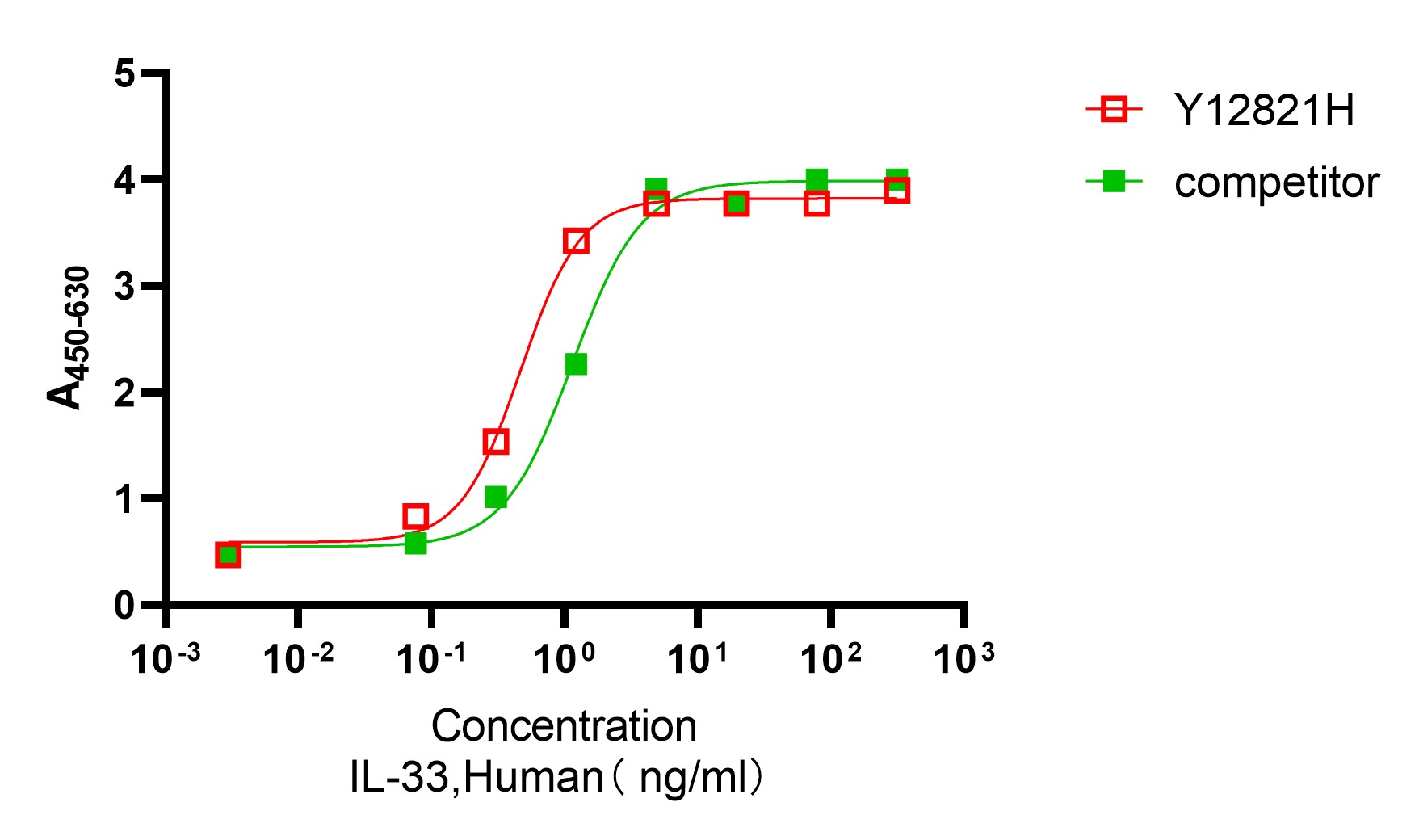
Measured by its ability to induce IL-8 secretion by HUVEC human umbilic vein endothelial cells. The ED50 for this effect is ≤1.0ng/ml.

Jiangsu East-Mab Bio:Building 13 and 17, 888 Zhujiang Road, Rudong, Nantong, Jiangsu 226499 , China
Suzhou East-Mab Bio:Floor 5 & 6, Building 1, 168 Majian Road, Suzhou, Jiangsu 215129, China
Platform Information Submission-Privacy Agreement
· Privacy Policy
No content yet
Platform Information Statement-Laws and Regulations
· Laws and regulations
Trademark registration of Jiangsu Dongkang Biomedical Technology Co., Ltd.
East Mab
East Mab Bio
东抗生物
 Online Consultation
 Related Products
 Application Details

