
Cat#:Y13011B
Species:Bovine
Size:10μg/100mg/1g
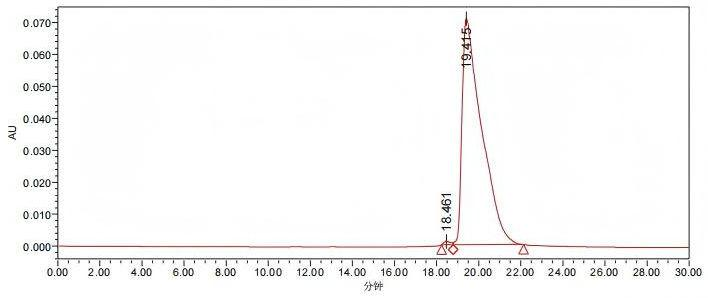
Purity:≥95%
Endotoxin: ≤10 EU/mg
Cat#:Y13011B
Species:Bovine
Size:10μg/100mg/1g
Purity:≥95%
Endotoxin: ≤10 EU/mg
Bovine Insulin is a peptide hormone that regulates glucose uptake, glycogen synthesis, and cellular metabolism while promoting cell growth, proliferation, and survival. It is widely used as a cost-effective growth factor supplement in cell culture media, particularly for hybridoma, CHO cell, and stem cell applications. Recombinant Bovine Insulin Protein (Y13011B) is expressed from Yeast cells. It contains AA Gly85-Asn105 & Phe25-Ala54 (Accession # P01317), and is widely used in advanced cell culture, bioprocessing, cell-cultured meat production, and large-scale cell manufacturing.
Serum-Free Media Supplementation — Replaces serum-derived insulin in chemically defined culture formulations at reduced cost.
Hybridoma and Monoclonal Antibody Production — Supports robust growth and immunoglobulin secretion in antibody-producing cell lines.
CHO Cell Culture and Recombinant Protein Manufacturing — Enhances cell density and productivity in bioreactor-based protein production.
Stem Cell and Primary Cell Expansion — Promotes metabolic activity and survival of nutrient-dependent cell populations.
Adipogenic Differentiation — Induces lipid accumulation in mesenchymal stem cell-derived adipocytes.
Cell-Cultured Meat Production — Supports proliferation and metabolic activity of muscle satellite cells, fibroblasts, and adipogenic precursors in serum-free and plant-based media formulations.
Cat. No. | Y13011B |
Purity | ≥95%, by SDS-PAGE (under reducing (R) & Non-reducing conditions, visualized by Coomassie staining). |
Endotoxin | ≤10 EU/mg by the LAL method. |
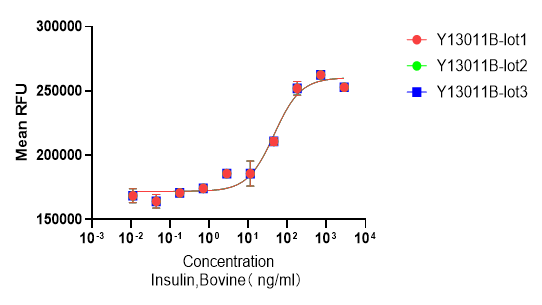
Bioactivity | Measured in a serum-free cell proliferation assay using MCF-7 human breast cancer cells. The ED50 is ≤50ng/ml. |
Accession | P01317 |
Alternative Names | INS |
Species | Bovine |
Expression System | Yeast |
Mol. Weight | 5.7 kDa |
Expression Region | Gly85-Asn105 & Phe25-Ala54 |
Tag Info | Tag free |
Formulation | Lyophilized |
Buffer | Lyophilized from a 0.22 μm-filtered solution |
Lead Time | Products are in stock, but custom products may require further consultation. |
Shipping | The product is shipped with blue ice. |
36 months at -20°C to -80°C in lyophilized state;
6 months at -20°C to -80°C under sterile conditions after reconstitution;
7-10 days at 2°C to 8°C under sterile conditions after reconstitution;
Use a manual defrost freezer and avoid repeated freeze-thaw cycles.
It is recommended to redissolve in sterile deionized water.
Bovine Insulin is a 51-amino acid peptide hormone (A-chain 21 aa, B-chain 30 aa) that shares approximately 85% sequence homology with human insulin. It signals through the insulin receptor (IR) to activate PI3K-AKT and RAS-MAPK pathways, promoting glucose transport, glycogen synthesis, and anabolic metabolism. In cell culture, insulin functions as a growth factor that mimics serum activity, stimulating DNA synthesis and inhibiting apoptosis across diverse cell types. It is an essential component of serum-free media formulations for hybridoma culture, CHO cell bioprocessing, and stem cell expansion. Recombinant bovine insulin eliminates batch-to-batch variability and potential immunogenicity risks associated with animal-derived preparations.
In cell-cultured meat production, bovine insulin supports the proliferation and maturation of bovine muscle satellite cells, fibroblasts, and adipogenic precursors in serum-free and plant-based media. As the industry scales toward cost-effective cultivated meat production, species-matched recombinant bovine insulin optimizes cell expansion efficiency and supports structured meat product development with appropriate muscle, fat, and connective tissue composition.
Q1: What is Bovine Insulin mainly used for?
Bovine Insulin is primarily used for serum-free media supplementation, hybridoma and CHO cell culture, stem cell expansion, adipogenic differentiation, and cell-cultured meat production.
Q2: Is this Bovine Insulin suitable for serum-free culture systems?
Yes. EastMabBio recombinant Bovine Insulin is compatible with serum-free, xeno-free, and chemically defined media systems.
Q3: How does Bovine Insulin compare to Human Insulin in cell culture?
Bovine Insulin shares approximately 85% sequence homology with human insulin and exhibits comparable receptor binding affinity and biological activity in most mammalian cell culture applications, offering a cost-effective alternative for large-scale manufacturing and cell-cultured meat production.
Q4: Is this Bovine Insulin suitable for food-grade cell-cultured meat applications?
EastMabBio recombinant Bovine Insulin is produced under stringent quality control standards suitable for research and development in cell-cultured meat production. Please contact our technical team to discuss specific regulatory and food-grade requirements for your application.
Q5: How should recombinant Bovine Insulin be stored?
Lyophilized protein should be stored at -20°C or below. After reconstitution, aliquot and avoid repeated freeze-thaw cycles.
Q6: What shipping conditions are used?
Products are shipped on dry ice with validated cold-chain packaging to maintain stability during international transportation.
Q7: Do you provide QC documents?
Yes. COA, MSDS, TSE-BSE statements, endotoxin reports, bioactivity data, and additional QC documentation are available upon request.
SDS-PAGE
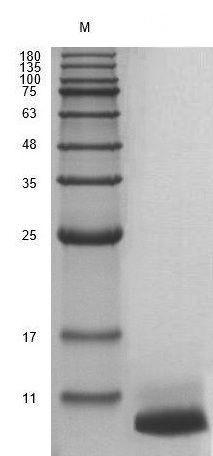
Recombinant Bovine Insulin (Cat. No. Y13011B) was analyzed by SDS-PAGE.The purity of the protein is greater than 95%.
Bioactivity
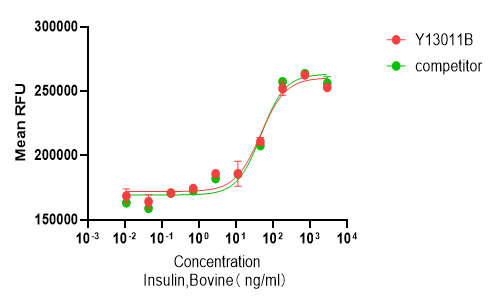
Measured in a serum-free cell proliferation assay using MCF-7 human breast cancer cells. The ED50 is ≤ 50 ng/ml.

SEC-HPLC
Jiangsu East-Mab Bio:Building 13 and 17, 888 Zhujiang Road, Rudong, Nantong, Jiangsu 226499 , China
Suzhou East-Mab Bio:Floor 5 & 6, Building 1, 168 Majian Road, Suzhou, Jiangsu 215129, China
Platform Information Submission-Privacy Agreement
· Privacy Policy
No content yet
Platform Information Statement-Laws and Regulations
· Laws and regulations
Trademark registration of Jiangsu Dongkang Biomedical Technology Co., Ltd.
East Mab
East Mab Bio
东抗生物
 Online Consultation
 Related Products
 Application Details

