
Blog
Small Intestine Organoid: A Researcher’s Guide to Advanced Models
2026.03.13
The rapid development of iPSC-derived cell therapies is creating new demands for reliable, reproducible, and scalable cell culture systems. From iPSC maintenance and expansion to differentiation and downstream cell therapy development, the extracellular matrix (ECM) plays a critical role in providing cells with the appropriate microenvironment. Among the various ECM proteins used in stem cell culture, Laminin has become an important component of iPSC culture platforms. For researchers developing iPSC-based workflows, choosing a suitable recombinant Laminin can help support consistent cell attachment, proliferation, pluripotency maintenance, and downstream differentiation.
Laminins are major components of the extracellular matrix and are involved in cell adhesion, migration, proliferation, differentiation, and tissue organization. In the native stem cell niche, ECM proteins interact with cell-surface receptors and signaling pathways to regulate cellular behavior. When iPSCs are cultured in vitro, an appropriate ECM substrate can provide a more supportive environment for cell attachment and expansion. This is particularly important when moving from conventional laboratory-scale culture toward more standardized and scalable iPSC workflows. Recombinant Laminin offers a defined ECM component that can be incorporated into serum-free and xeno-free cell culture systems, depending on the specific product and application.
Not all Laminin isoforms perform the same function. For iPSC and pluripotent stem cell culture, Laminin-521 (LN-521) and Laminin-511 (LN-511) are widely studied ECM components.
Laminin-521 for iPSC Expansion
iPSC attachment
Cell survival
Long-term expansion
Maintenance of pluripotent stem cell characteristics
Serum-free and defined culture workflows
These properties make Laminin-521 an attractive component for workflows where maintaining healthy and consistent iPSC populations is important.
Laminin-511 for Pluripotent Stem Cell Culture
Laminin-511 is another commonly studied laminin isoform for human pluripotent stem cell culture. Depending on the cell type and culture strategy, Laminin-511 can support cell attachment and expansion while providing a defined extracellular matrix environment. The selection between LN-521 and LN-511 should ultimately be based on the specific cell type, culture medium, passage strategy, and downstream application. Recombinant Laminin offers a defined ECM component that can be incorporated into serum-free and xeno-free cell culture systems, depending on the specific product and application.
iPSC establishment→ iPSC expansion→ Directed differentiation→ Cell maturation→ Cell characterization→ Functional evaluation→ Process development
At each stage, cell culture conditions can influence the final cell population. For example, inconsistent cell attachment during iPSC expansion may result in changes in cell morphology, growth kinetics, or culture performance. Likewise, variations in the starting iPSC population can potentially affect downstream differentiation outcomes. This is why a well-defined and reproducible culture environment is becoming increasingly important in iPSC-based process development. Recombinant Laminin offers a defined ECM component that can be incorporated into serum-free and xeno-free cell culture systems, depending on the specific product and application.
As iPSC research moves toward larger-scale applications, researchers are increasingly looking beyond simply achieving cell growth.
Key considerations include:
1. Consistent Cell Attachment
A reliable ECM substrate can help provide a consistent surface for iPSC attachment and growth.
2. Reproducible Cell Expansion
Stable culture conditions are important for maintaining consistent growth characteristics across passages.
3. Defined Culture Systems
Recombinant ECM proteins can be incorporated into defined and serum-free culture systems, helping reduce variability associated with undefined biological components.
4. Compatibility with Process Development
For researchers developing scalable iPSC workflows, defined ECM components can simplify process optimization and improve experimental consistency.
5. Support for Downstream Differentiation
The quality and condition of the starting iPSC population are important considerations when developing differentiation workflows for cardiomyocytes, neurons, immune cells, pancreatic cells, and other iPSC-derived cell types.
EastMabBio provides recombinant Laminin products designed to support iPSC culture, stem cell research, and advanced cell culture applications. Each batch of product is tested for purity, endotoxin, biological activity, and batch‑to‑batch stability.
Laminin- 511 E8 /Laminin-521 E8 Product Data
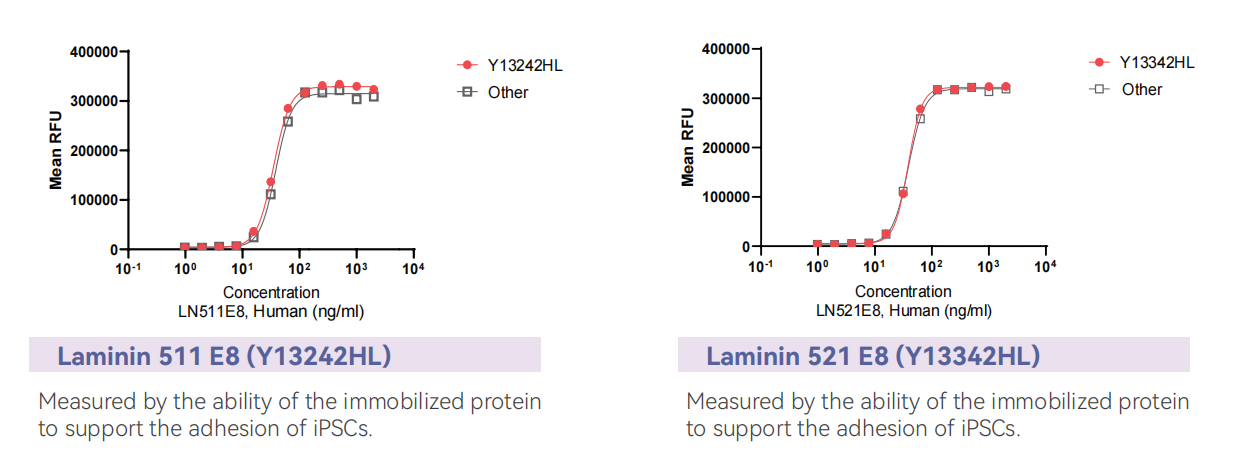
Figure 1. The bioactivity of Laminin- 511 E8(Y13242HL) /Laminin-521 E8(Y13342HL)
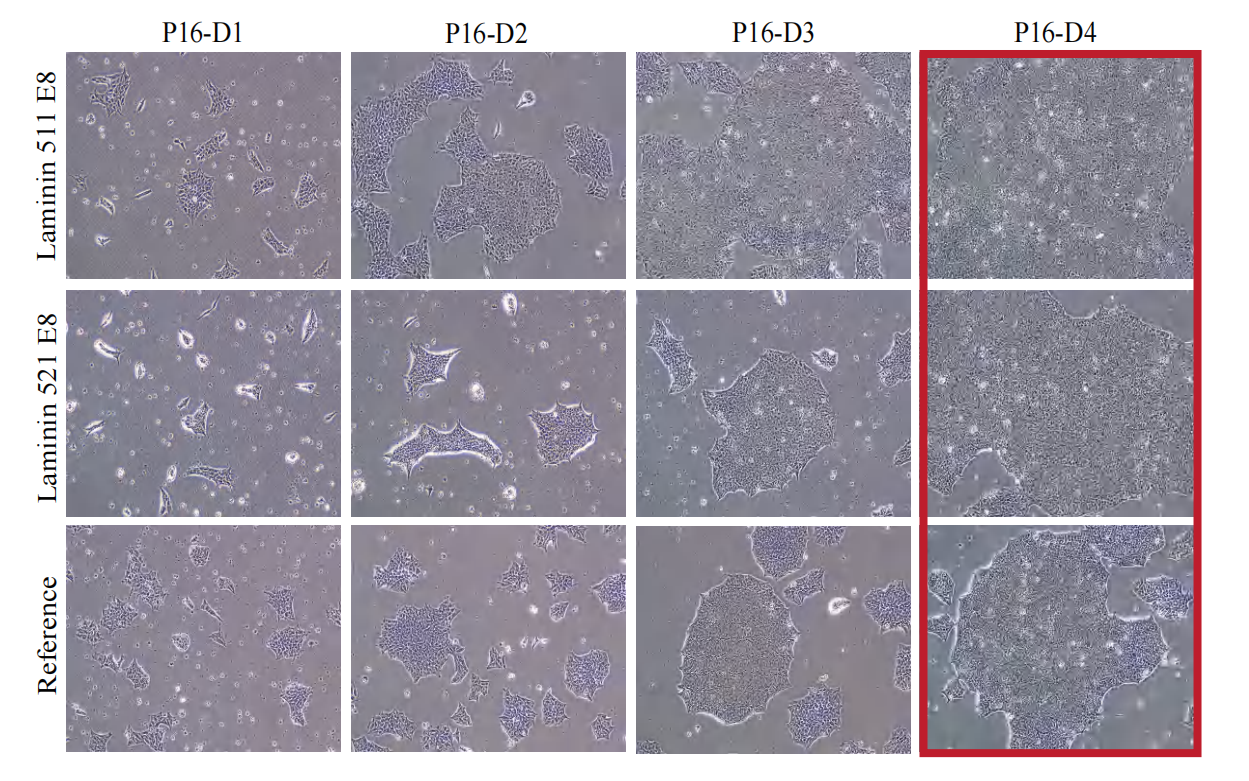
Figure 2. Laminin 511 E8 (Y13242HL) /Laminin 521 E8 (Y13342HL) effectively maintains the expansion of human iPSCs.
News
Platform Information Submission-Privacy Agreement
· Privacy Policy
No content yet
Platform Information Statement-Laws and Regulations
· Laws and regulations
Trademark registration of Jiangsu Dongkang Biomedical Technology Co., Ltd.
East Mab
East Mab Bio
东抗生物