
Blog
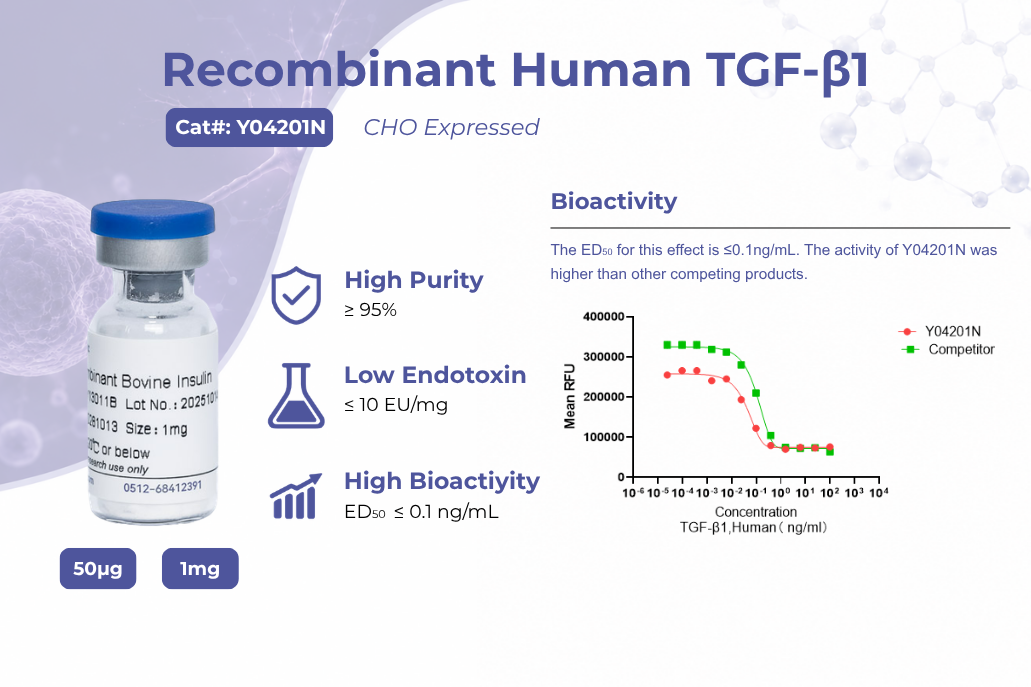
Recombinant Human TGF-β1: Purity for Critical Biotech Applications
2026.06.02
Here, we define organoids and small intestine organoids, explain how they form, and highlight their core traits to set a clear foundation.
Organoids are three-dimensional (3D) in vitro models derived from stem cells. They self-organize, recreating the layered architecture and many functions of native tissues. In practice, they bridge the gap between traditional two-dimensional cell cultures and whole-animal models.
Generating small intestine organoids involves culturing intestinal stem cells, often from crypts or induced pluripotent stem cells (iPSCs), within a specialized extracellular matrix. Key growth factors, such as FGFs, Wnt, and R-spondin, direct differentiation and self-assembly into complex structures. The process recapitulates the crypt-villus architecture of the small intestine.
Small intestine organoids show cellular heterogeneity, including all major epithelial lineages of the small intestine (enterocytes, goblet cells, Paneth cells, enteroendocrine cells), organized into a polarized, crypt-villus-like epithelium. They functionally resemble the in vivo small intestine, making them superior to 2D cultures. Advantages include physiological relevance, scalability, and reduced reliance on animal models.
This section outlines where small intestine organoids make a tangible impact across research fields and why they have become a preferred platform.
Small intestine organoids are invaluable for modeling gastrointestinal diseases like inflammatory bowel disease (IBD), celiac disease, and infections. They support high-throughput drug screening and toxicity testing, helping speed therapeutic development. Researchers can probe disease mechanisms and evaluate drug efficacy in a human-relevant context.
Disease Model | Modeling Strategy | Key Cytokines |
Inflammatory Bowel Disease (IBD) | Cytokine stimulation / Patient-derived organoids (PDOs) | TNF-α、IL-1β、IL-22、IFN-γ、IL-6 |
Cystic Fibrosis | Forskolin stimulation (FIS assay) | Wnt3a、R-spondin 1、Noggin、EGF (for maintance) |
Infectious Diseases | Pathogen microinjection | IFN-γ、IL-6 |
Malabsorption Disorders | SGLT1/GLUT2 deficiency | EGF、IGF-1、HGF |
Bile Acid Disorders | FXR activation/inhibition | EGF、HGF (for epithelial health) |
Small intestine organoids hold significant potential in regenerative medicine. They can be used for tissue engineering, potentially leading to transplantation therapies for damaged intestines. Patient-specific organoids enable the development of personalized treatment strategies. These models predict individual responses to therapies, advancing precision medicine.
Researchers use small intestine organoids to investigate nutrient absorption and gut-microbiome interactions. They clarify how dietary components influence intestinal health. The work informs food science and supports the development of probiotics.
Key challenges include sustaining long-term culture stability and building models with vascularization or innervation. Standardizing culture protocols and scaling production for high-throughput use are still needed. Future efforts focus on integrating immune cells and neuronal components for more complete systems.
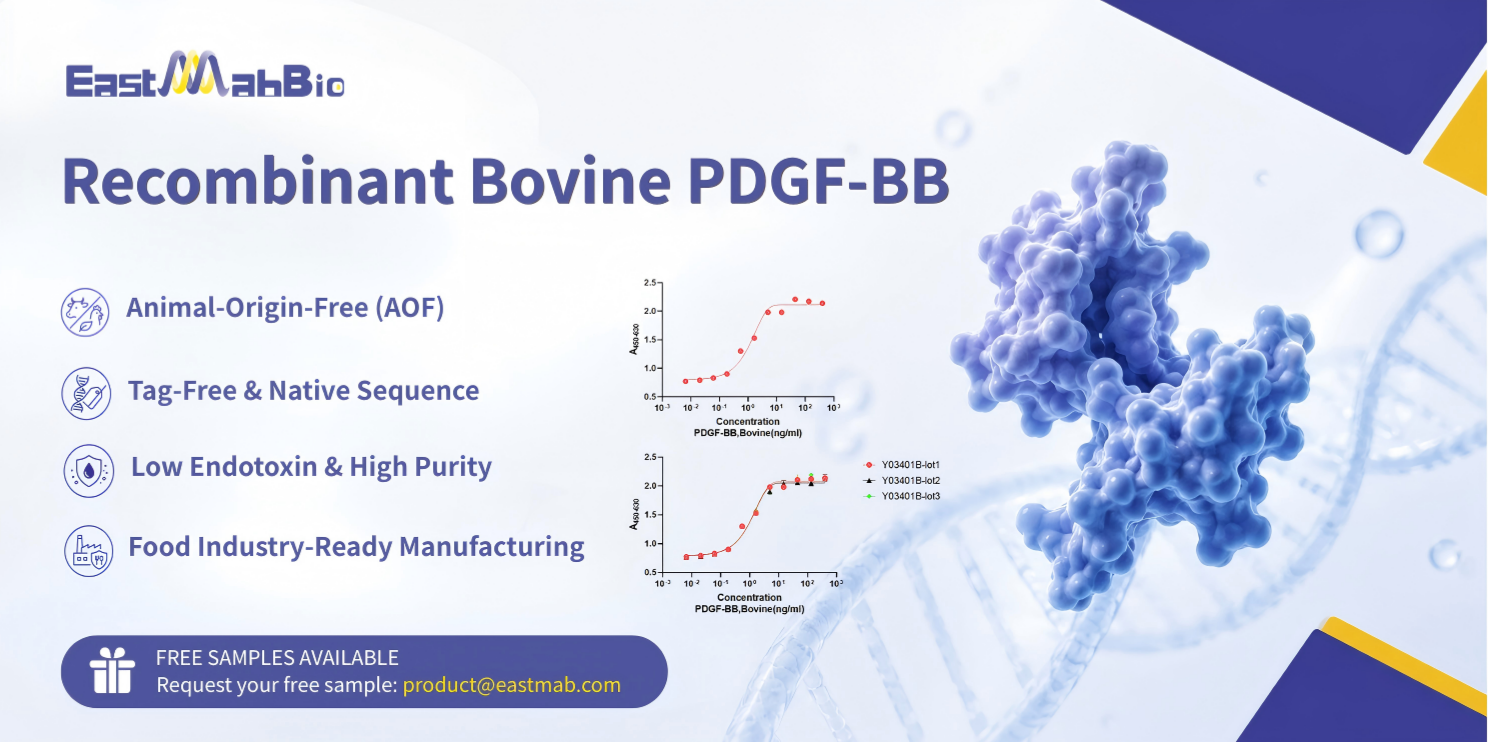
EastMabBio provides a comprehensive portfolio of high-quality recombinant proteins for cell culture to support your organoid research, along with dedicated technical support and customized services for every customer.
For process validation data, customized specifications, or business collaboration inquiries, please feel free to contact us at any time.
Email: product@eastmab.com
Phone: +86-400-998-0106
Small intestine organoids provide a more physiologically relevant 3D model than traditional 2D cell cultures, better reflecting tissue architecture, cellular heterogeneity, and functional responses of the human gut. They are invaluable for disease modeling, drug screening, and studying complex biological processes.
Recombinant proteins, such as GFs (e.g., EGF, Wnt, R-spondin) and extracellular matrix components, are necessary to initiate and maintain the growth, differentiation, and self-organization of small intestine organoids from stem cells. High-quality and consistent recombinant proteins help ensure reproducible and robust organoid development.
Challenges include achieving long-term culture stability, adding vascularization and innervation for more complex models, standardizing culture protocols, and scaling production for high-throughput applications. The quality and consistency of raw materials, like recombinant proteins, also affect variability.
Yes, patient-derived small intestine organoids can be generated from biopsies, allowing researchers to create “avatars” of a patient’s gut tissue. These personalized organoids can be used to test drug efficacy and toxicity, helping tailor treatments for individual patients with gastrointestinal diseases.
News
Platform Information Submission-Privacy Agreement
· Privacy Policy
No content yet
Platform Information Statement-Laws and Regulations
· Laws and regulations
Trademark registration of Jiangsu Dongkang Biomedical Technology Co., Ltd.
East Mab
East Mab Bio
东抗生物


