Blog
How to Choose the Right Recombinant Protein Expression System for Your Research Needs
2026.07.16
Working with TGF-β1 over the years has taught me that protein quality isn’t just a specification on a datasheet—it’s the difference between an experiment that yields clear, reproducible results and one that leaves you questioning every variable. Recombinant Human TGF-β1 sits at the center of so many cellular processes, from wound healing to immune regulation, that any inconsistency in the material ripples through everything downstream. The challenge has always been producing this growth factor at a purity level that matches its biological importance, and that’s where the real work begins.
Transforming Growth Factor-beta 1 belongs to the TGF-beta superfamily, a family of multifunctional proteins that regulate cell proliferation, differentiation, and immunomodulation. What makes TGF-β1 particularly interesting is its dual nature—it can suppress or promote cellular activity depending on context, cell type, and the presence of other signaling molecules.
The protein typically exists as a homodimer, binding to specific cell surface receptors that initiate signal transduction pathways. Once bound, a cascade of intracellular events unfolds, ultimately influencing gene expression and cellular behavior. This mechanism explains why TGF-β1 appears in such diverse biological contexts, from maintaining tissue homeostasis to orchestrating complex inflammatory responses.
Understanding this receptor binding and signal transduction mechanism matters for anyone designing experiments or developing therapies. The protein doesn’t act in isolation—it responds to and shapes its cellular environment in ways that demand careful experimental control.
TGF-β1 regulates wound healing and tissue repair by promoting extracellular matrix deposition. It influences immune cell activity in ways that can either dampen or amplify inflammatory responses. When TGF-β1 signaling goes wrong, the consequences show up in conditions like fibrosis and various cancers, where abnormal cell migration and disrupted apoptosis create pathological states.
This multifaceted nature makes TGF-β1 valuable for studying fundamental cell biology. Researchers use it to probe questions about how cells decide to divide, differentiate, or die—decisions that underpin both normal development and disease progression.
Endogenous TGF-β1 comes with baggage. Isolating native protein from biological sources introduces variability from post-translational modifications, contaminating proteins, and batch-to-batch differences that can confound experimental results.
Recombinant TGF-β1 sidesteps these problems through protein engineering techniques that allow controlled production and consistent quality. The absence of complex post-translational modifications—often seen as a limitation—actually becomes an advantage when reproducibility matters most. Every batch behaves the same way, with defined purity profiles and predictable bioactivity.
This synthetic protein provides a standardized, scalable resource that overcomes the fundamental limitations of working with native material. For applications where consistency determines success or failure, that distinction matters enormously.
Producing high-purity recombinant human TGF-β1 requires more than good intentions. The manufacturing process involves multiple stages, each with potential failure points that can compromise the final product. From initial gene cloning through final formulation, every step demands precise control.
The goal is straightforward: deliver a product with maximum bioactivity and minimal contaminants. Achieving that goal requires sophisticated protein expression systems, rigorous purification strategies, and quality control measures that catch problems before they reach customers. Comprehensive bioactivity assays and endotoxin levels testing ensure compliance with GMP standards while maintaining lot-to-lot consistency in recombinant protein manufacturing.
The path to high-purity recombinant TGF-β1 starts with selecting the optimal protein expression systems. E. coli expression offers attractive yields, but mammalian cell expression systems like CHO cells often prove necessary for complex human proteins that require correct folding and specific post-translational modifications.
After expression, multi-stage protein purification techniques separate the target protein from everything else. Affinity chromatography captures the protein of interest, ion exchange chromatography removes charged impurities, and size exclusion chromatography provides final polishing. For proteins expressed as inclusion bodies, controlled protein refolding protocols restore bioactivity—a step that requires careful optimization to avoid aggregation or misfolding.
Expertise in expression vectors and large-scale fermentation determines whether a manufacturer can produce high-quality material efficiently or struggles with inconsistent results.
Quality control for recombinant human TGF-β1 goes beyond checking boxes. SDS-PAGE, HPLC, and mass spectrometry verify protein characterization, confirming that the product matches its specifications. But analytical methods alone don’t tell the whole story.
Cell-based assays confirm specific bioactivity, ensuring the protein performs as expected in biological systems. A protein can look perfect on a gel and still fail to trigger the signaling pathways it’s supposed to activate. Sterility testing and mycoplasma testing guarantee product safety, while stability studies determine optimal storage conditions and shelf life.
Endotoxin testing deserves special attention. Even trace amounts of endotoxin can interfere with sensitive cell culture applications, triggering inflammatory responses that confound experimental results. Strict specifications and comprehensive analytical reports accompany every product, with lot-specific Certificates of Analysis documenting what each batch actually contains.
Recombinant Human TGF-β1 drives innovation across biotechnology in ways that weren’t possible a generation ago. The demand for high-purity material continues to grow as researchers push into new applications and industries recognize the protein’s potential.
This growth factor proves indispensable in cell culture media optimization, stem cell research, and organoid development. It plays significant roles in IVD reagent development, cell therapy manufacturing, and biopharmaceutical applications. The protein’s utility extends to drug discovery, cultivated meat research, and cosmetics—a range of applications that reflects its fundamental importance in controlling cellular behavior.
In cell culture, recombinant human TGF-β1 modulates cellular behavior with remarkable precision. Researchers use it to guide pluripotent stem cells and mesenchymal stem cells toward specific lineages, inducing chondrogenic differentiation or osteogenic differentiation depending on the application.
For regenerative medicine, this control over cell fate opens possibilities that were once theoretical. TGF-β1 supports ex vivo expansion of specific cell populations and serves as a common component in serum-free media formulations, promoting cell viability and function without the variability that serum introduces.
The protein’s precise control over differentiation makes it essential for developmental biology research and cell-based assays where understanding cellular decisions matters most.
Recombinant human TGF-β1 contributes to diagnostics, therapeutics, and advanced biomaterials in ways that translate directly to clinical and commercial applications. In diagnostics, it serves as a critical reagent for biomarker discovery and immunoassay development. Therapeutically, its immunomodulatory properties attract interest for gene therapy and various disease treatments.
Tissue engineering applications leverage TGF-β1’s ability to promote tissue regeneration and integration. Wound healing products incorporate the protein to accelerate repair processes. Drug screening platforms use it to create more physiologically relevant models.
Medical devices and advanced biomaterials increasingly incorporate TGF-β1 to enhance biological compatibility and functionality—applications where protein quality directly affects patient outcomes.
Choosing recombinant protein suppliers determines whether your work succeeds or struggles with inconsistent materials. The purity and consistency of recombinant human TGF-β1 directly influence experimental reproducibility and the safety of downstream products.
A reliable source provides more than products—it offers comprehensive support and adherence to international standards. When evaluating suppliers, quality assurance protocols, technical support capabilities, and regulatory compliance all matter. Batch consistency, cost-effectiveness, and lead time affect research and development efficiency. Some suppliers offer custom protein services for specificprojectneeds.
Product quality and purity evaluation starts with bioactivity data. Numbers on a spec sheet mean nothing if the protein doesn’t perform its biological function. Scrutinize the assays used to measure activity and compare results across lots.
Endotoxin specifications matter enormously for cell-based applications. Even trace amounts can trigger inflammatory responses that mask or mimic experimental effects. Verify stated protein concentration and review stability data to ensure product integrity over time.
Request comprehensive analytical reports and lot-specific Certificates of Analysis confirming purity (typically ≥95% by SDS-PAGE) and absence of contaminants. High protein integrity minimizes experimental variability, ensuring reliable and reproducible results that you can build on.
Beyond product specifications, robust technical support and regulatory compliance separate adequate suppliers from excellent ones. ISO certification and adherence to GMP guidelines indicate commitment to quality management systems that catch problems before they reach customers.
Comprehensive documentation—detailed product information and manufacturing records—proves vital for traceability and regulatory submissions. Access to scientific expertise and responsive customer service streamlines research and development efforts, especially when troubleshooting unexpected results.
Strong regulatory support and reliable supply chain management ensure uninterrupted access to critical raw materials. For long-term projects, supply continuity can determine whether timelines hold or slip.
At Jiangsu East-Mab Biomedical Technology Co., Ltd., we are dedicated to advancing global biotechnology with ourhigh-qualityrecombinant protein raw materials. Our commitment to unparalleled purity, bioactivity, and batch consistency ensures your critical research and industrial applications achieve optimal results. Partner with us to accelerate your innovations in IVD, cell therapy, organoids, and more. Contact our experts today to discuss your specific requirements and explore our comprehensive product portfolio.
Email: product@eastmab.com
Phone: +86-400-998-0106
Recombinant human TGF-β1 guides stem cell differentiation, directing pluripotent and mesenchymal stem cells toward specific lineages like chondrogenic or osteogenic. It supports organoid culture by facilitating complex tissue development and serves as a component in serum-free media formulations. The protein also enables ex vivo cell expansion, promoting robust cell growth and specialized functions across research and therapeutic applications.
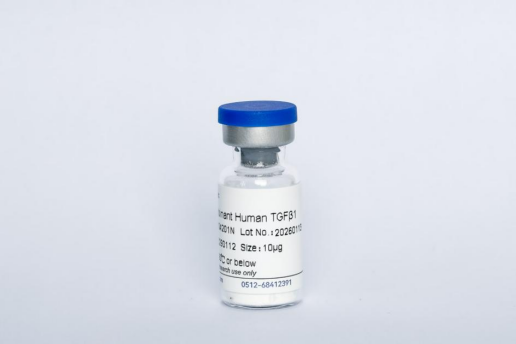
Lyophilized protein should be stored at -20°C or below. After reconstitution, aliquot and avoid repeated freeze-thaw cycles.
Products are shipped on dry ice with validated cold-chain packaging to maintain stability during international transportation.
Yes. COA, MSDS, TSE-BSE statements, endotoxin reports, bioactivity data, and additional QC documentation are available upon request.
Yes. EastMabBio provides both research-grade and GMP-grade recombinant TGF-β1 for translational and biomanufacturing applications.
News
Platform Information Submission-Privacy Agreement
· Privacy Policy
No content yet
Platform Information Statement-Laws and Regulations
· Laws and regulations
Trademark registration of Jiangsu Dongkang Biomedical Technology Co., Ltd.
East Mab
East Mab Bio
东抗生物