
Blog
Protein Engineering and Formulation Strategies to Enhance Recombinant Protein Stability and Shelf Life
2026.07.20
Recombinant human TGF-β2 occupies a unique biological crossroads, serving as a core workhorse in basic research while remaining a critical component in advanced therapeutic development pipelines. Conceptually simple in structure, this protein exhibits remarkably complex biological functions, regulating key processes including wound healing and immune cell activity. For researchers and manufacturers sourcing this growth factor for rigorous studies or production applications, identifying high quality, consistent batches can prevent extensive downstream troubleshooting and save significant research time.
Recombinant human TGF-β2 belongs to the TGF-beta superfamily, a group of multifunctional cytokines that regulate cell growth, differentiation, apoptosis, and immune function. The protein forms a homodimeric polypeptide, typically composed of two identical 112-amino acid subunits linked by disulfide bonds. This disulfide-bonded architecture isn’t just structural decoration — it’s what allows the molecule to maintain stability under physiological conditions and present the correct binding surfaces to its receptors.
The three-dimensional conformation determines receptor binding specificity. When recombinant human TGF-β2 engages its cell surface receptors, it triggers intracellular signaling cascades that often involve Smad proteins. These Smad proteins then translocate to the nucleus where they modulate gene expression patterns. The precision of this signaling pathway explains why even small variations in protein folding or post-translational modifications can dramatically affect biological activity.
Researchers study TGF-β2 extensively for its roles in embryonic development, tissue homeostasis, and disease pathogenesis. The protein doesn’t operate in isolation — it participates in complex regulatory networks that determine whether cells proliferate, differentiate, or undergo programmed death.
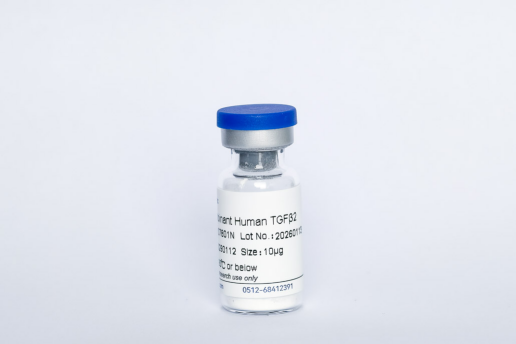
The biological effects of recombinant human TGF-β2 extend across multiple tissue systems. In wound healing contexts, the protein promotes extracellular matrix production and stimulates fibroblast proliferation — both necessary for tissue repair. However, this same activity becomes problematic in fibrosis, where TGF-β2 drives excessive collagen deposition that leads to tissue scarring.
The immunomodulatory properties of TGF-β2 add another layer of complexity. The protein can suppress immune responses by influencing T cell behavior and modulating other immune cell populations. This dual nature — promoting repair while potentially suppressing immunity — makes TGF-β2 particularly interesting for therapeutic applications where immune balance matters.
Producing recombinant human TGF-β2 with consistent purity and bioactivity requires more than standard protein expression protocols. The choice of expression system fundamentally shapes the final product’s characteristics.
Mammalian cell culture systems, particularly Chinese Hamster Ovary (CHO) cells, offer advantages for complex proteins like TGF-β2. These systems support proper protein folding and generate post-translational modifications that bacterial systems cannot replicate. While E. coliexpression works efficiently for simpler proteins, the glycosylation patterns and folding requirements of TGF-β2 generally favor mammalian expression when biological activity is the priority.
The manufacturing process involves sequential stages: gene cloning to establish the expression construct, protein expression optimization, cell culture scale-up to production volumes, and purification to remove host cell proteins and other contaminants. Each stage introduces potential variability that must be controlled through rigorous quality systems.
Lot-to-lot consistency matters enormously for research applications. When experimental results depend on protein activity, batch variation becomes a confounding variable that can obscure real biological findings. Storage conditions also affect long-term stability — improper handling can degrade activity even in otherwise high-quality material.
Purity assessment for recombinant human TGF-β2 typically employs SDS-PAGE and High-Performance Liquid Chromatography (HPLC) to confirm protein integrity and homogeneity. These analytical methods detect degradation products, aggregates, and contaminating proteins that could interfere with downstream applications.
Bioactivity testing provides functional verification that analytical purity methods cannot. Cell-based assays measuring proliferation or differentiation responses confirm that the protein actually performs its intended biological function. A batch might appear pure by HPLC yet show reduced activity due to subtle conformational issues — only functional testing catches this.
Endotoxin monitoring is non-negotiable for applications involving live cells. Even low endotoxin levels can activate immune pathways and confound experimental results, particularly in cell therapy contexts where product safety depends on contamination control.
The distinction between recombinant and native TGF-β2 comes down to origin and consistency. Native protein isolated from biological tissues carries inherent variability — different tissue sources, isolation batches, and purification runs produce material with varying purity and activity profiles.
Recombinant production in controlled laboratory settings offers reproducibility that native isolation cannot match. The genetic sequence is defined, the expression system is characterized, and the purification process follows validated protocols. This consistency translates to more reliable experimental results.
Post-translational modifications can differ between expression systems. Mammalian cell-expressed recombinant human TGF-β2 generally produces glycosylation patterns closer to the native protein than bacterial expression systems would. For applications where glycosylation affects receptor binding or protein stability, this distinction matters.
The applications for recombinant human TGF-β2 span basic research through commercial product development. The protein’s ability to influence cell fate decisions makes it valuable wherever cellular behavior needs to be directed or studied.
Application Area | How TGF-β2 Functions |
Cell Culture Media | Supports specific differentiation pathways and maintains cell phenotypes |
Cell Therapy Manufacturing | Directs stem cell differentiation toward therapeutic cell types |
Organoid Development | Promotes tissue-like organization in three-dimensional culture systems |
IVD Components | Serves as calibrator or control material in diagnostic assays |
Cultivated Meat Research | Influences muscle and fat cell development in food production contexts |
Cosmetics Research | Studied for effects on skin cell behavior and wound healing |
The cell therapy sector represents a particularly demanding application. Manufacturing therapeutic cell products requires raw materials with documented quality, consistent activity, and regulatory-compliant documentation. Recombinant human TGF-β2 used in these contexts must meet specifications that go beyond typical research-grade material.
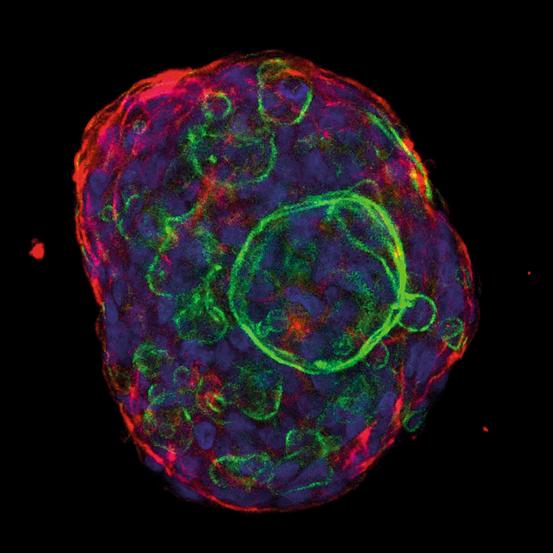
Organoid research has expanded rapidly as a model system for studying tissue development and disease. TGF-β2 signaling influences how cells organize into tissue-like structures, making the protein a common component in organoid culture protocols.
What purity level should I expect from research-grade recombinant human TGF-β2?
Research-grade material typically exceeds 95% purity as measured by SDS-PAGE or HPLC. For cell therapy applications, higher purity specifications and additional testing for adventitious agents may be required. The appropriate grade depends on your specific application — basic research can often tolerate slightly lower purity than clinical manufacturing.
How should recombinant human TGF-β2 be stored to maintain activity?
Lyophilized protein generally stores at -20°C or below. After reconstitution, aliquoting and storage at -80°C minimizes freeze-thaw cycles that can degrade activity. Avoid repeated freezing and thawing of the same aliquot. Working dilutions should be prepared fresh when possible.
Can bacterial expression systems produce functional TGF-β2?
Bacterial systems can express TGF-β2, but the protein often requires refolding from inclusion bodies and lacks mammalian glycosylation. For applications where glycosylation affects function or where native-like folding is critical, mammalian expression systems generally produce more reliable material.
What bioactivity assays are commonly used to verify TGF-β2 function?
The bioactivity of EastMabBio recombinant human TGF-β1 was measured in a cell inhibition assay using TF-1 cells in the presence of IL-4.. The ED50 for this effect is ≤0.3ng/mL.The specific assay should match your intended application — if you’re using TGF-β2 to drive differentiation, an assay measuring that specific outcome provides the most relevant quality information.
News
Platform Information Submission-Privacy Agreement
· Privacy Policy
No content yet
Platform Information Statement-Laws and Regulations
· Laws and regulations
Trademark registration of Jiangsu Dongkang Biomedical Technology Co., Ltd.
East Mab
East Mab Bio
东抗生物


