Blog
Gastric Organoid Culture: Building a More Defined and Reproducible 3D Culture System
2026.08.18
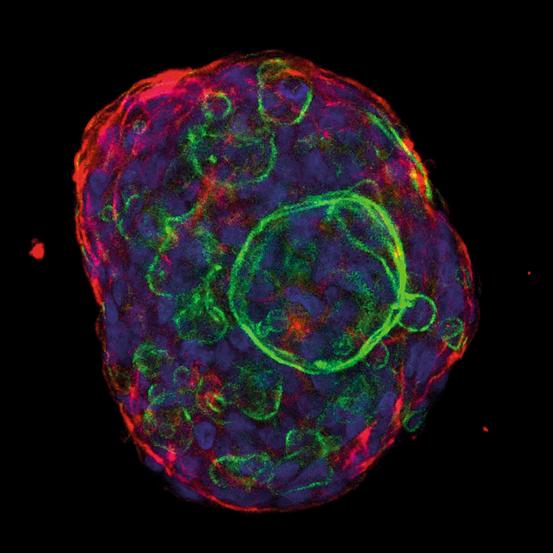
Organoids——self-organizing 3D cell cultures that mimic in vivo tissue architecture and function——are fundamentally reshaping biological research paradigms. Their growth and behavior are highly dependent on the precision of external signaling cues provided during every stage, from formation to differentiation. Recombinant proteins play a pivotal role in this process, enabling the precise recreation of microenvironments that support robust and reproducible 3D models across various applications. In this article, we explore the critical roles of proteins in organoid growth, the challenges of lot-to-lot inconsistency, and how EastMabBio provides advanced solutions through superior quality, a comprehensive portfolio, and continuous innovation.
Understanding the Critical Role of Proteins in Organoid Culture and Development
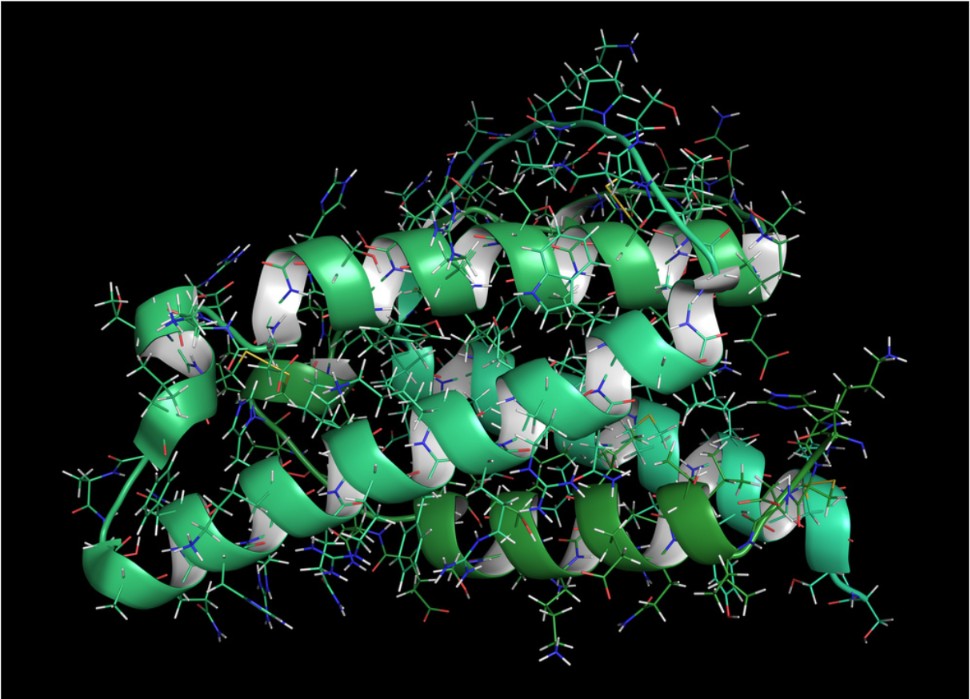
Organoids are three-dimensional cellular structures that self-assemble to recapitulate key physiological features of organs. They offer unprecedented opportunities to study development, disease mechanisms, and drug responses in a more physiologically relevant context than traditional 2D cell cultures. The successful growth and differentiation of organoids hinge on the delivery of precise biochemical and physical signals. Specific proteins are indispensable for guiding cell fate, promoting proliferation, and facilitating the complex cellular interactions necessary for tissue organization. Recombinant proteins, produced through biotechnological methods, allow for precise control over these critical factors, enabling researchers to create defined and reproducible culture conditions. This precision is vital for advancing research in areas such as regenerative medicine and personalized therapies.
Categorizing Essential Protein Types for Optimal Organoid Growth
Different classes of proteins play distinct yet complementary roles in supporting optimal organoid development. Understanding their specific functions and mechanisms of action is crucial for designing effective culture strategies. We categorize these essential proteins into growth factors, cytokines, and extracellular matrix components, each contributing uniquely to the organoid microenvironment.
Growth Factors: Indispensable Drivers of Cell Signaling and Proliferation
Growth factors are signaling proteins that bind to specific receptors on cell surfaces, triggering intracellular pathways that regulate cell proliferation, differentiation, and survival. In organoid culture, they are critical for directing stem cell behavior and promoting the expansion of specific cell lineages. For example, Epidermal Growth Factor (EGF) stimulates epithelial cell proliferation, while Fibroblast Growth Factors (FGFs) FGFs, such as EastMabBio’s Recombinant Human FGF-2/bFGF and Recombinant Human FGF-9, support various developmental processes and maintain stemness. Wnt signaling pathways, often modulated by recombinant Wnt proteins or agonists, are fundamental for intestinal and other organoid types, driving self-renewal and patterning. Bone Morphogenetic Proteins (BMPs) regulate cell differentiation and tissue formation, influencing processes like bone and cartilage development in relevant organoid models.
Cytokines: Influencing the Organoid Niche and Immune Modulation
Cytokines act as intercellular messengers, influencing cell growth, differentiation, and immune responses. In organoid systems, they contribute to the complex signaling networks that define the cellular niche, guiding tissue patterning and maturation. For instance, Noggin, a BMP antagonist, is frequently used to promote neural differentiation by inhibiting BMP signaling. R-spondin, a Wnt pathway activator, enhances Wnt signaling, which is crucial for maintaining the stem cell niche in intestinal and liver models. EastMabBio’s cytokines, such as Recombinant Human IL-2 and Recombinant Human IL-6, help establish the intricate balance required for proper organoid maturation and function.
Extracellular Matrix Proteins: Providing Structural Support and Biochemical Cues
Extracellular matrix (ECM) proteins form the structural scaffold around cells, providing physical support and biochemical signals that influence cell adhesion, migration, and differentiation. In 3D organoid culture, ECM components are vital for establishing the correct microenvironment, enabling cells to organize into complex tissue structures. Matrigel, a commonly used basement membrane extract, provides a complex mixture of ECM proteins that supports the growth of many organoid types. However, defined alternatives like recombinant laminins, Vitronectin, collagens, and Fibronectin are increasingly preferred for their batch-to-batch consistency and ability to create more controlled experimental conditions. These proteins are fundamental for recapitulating the in vivo tissue architecture and cell-matrix interactions.
Addressing the Challenges of Protein Quality and Consistency in Organoid Research
Researchers frequently encounter significant challenges related to the quality and consistency of recombinant proteins. Variability between different lots of proteins can lead to inconsistent experimental results, making it difficult to compare data across studies or even within the same laboratory. Purity concerns, suboptimal activity, and stability issues directly impact organoid morphology, growth rates, and differentiation patterns. These inconsistencies undermine the reproducibility and scalability of organoid research, hindering the translation of findings into clinical applications. Therefore, obtaining high-quality recombinant proteins with guaranteed purity and consistent biological activity is paramount for reliable organoid studies.
EastMabBio’s Advanced Solutions: Delivering High-Quality Recombinant Proteins for Organoid Culture
Jiangsu East-Mab Biomedical Technology Co., Ltd. is dedicated to providing superior recombinant proteins specifically designed for organoid applications. We leverage our extensive expertise and world-class platform to ensure the highest standards of quality and performance. Our rigorous production processes and stringent quality control measures guarantee that our products meet the demanding requirements of advanced 3D cell culture research.
Our Commitment to Purity and Activity: Ensuring Reproducible Organoid Outcomes
We employ advanced expression systems and purification techniques to produce recombinant proteins with exceptional purity, often exceeding 95%. Each protein undergoes rigorous functional validation to confirm its biological activity, ensuring consistent performance in sensitive organoid systems. Our quality control protocols include detailed analyses of protein identity, endotoxin levels (≤1 EU/mg or ≤10 EU/mg, depending on the product), and stability. This meticulous approach minimizes lot-to-lot variability, providing researchers with reliable tools for reproducible organoid experiments.
A Comprehensive Portfolio: Meeting Diverse Organoid Culture Needs
Our extensive product catalog includes a wide range of recombinant proteins essential for various organoid models. We offer numerous GFs such as Recombinant Human FGF-2/bFGF and Recombinant Human FGF-9, vital for cell proliferation and tissue development. Our selection also includes key cytokines like Recombinant Human IL-2 and Recombinant Human IL-6, integral to modulating the cellular microenvironment. Additionally, we provide specialized proteins like Recombinant Bovine/Porcine Activin A, which are critical for specific differentiation pathways. This diverse portfolio supports researchers in establishing and maintaining robust organoid cultures across different tissue types.
| Cat# | Product Name | Expression System | Purity | Bioactivity | Endotoxin (EU/mg) |
| Y00801P | Recombinant Human EGF | CHO | ≥95% | ED50≤0.3 ng/mL | ≤10 EU/mg |
| Y04603 | Recombinant Human Wnt-3a | CHO | ≥95% | ED50 <30ng/mL | ≤100 EU/mg |
| Y03301 | Recombinant Human Noggin | CHO | ≥95% | ED50 between 2.0-3.0 ng/mL | ≤10 EU/mg |
| Y03501 | Recombinant Human R-Spondin 1 | CHO | ≥95% | ED50 <1.0 μg/mL | ≤10 EU/mg |
| Y00351H | Recombinant Human FGF-2/bFGF | E. coli | ≥95% | ED50 ≤2.0 ng/mL | ≤20 EU/mg |
| Y01001 | Recombinant Human FGF-9 | CHO | ≥95% | ED50 between 1-3 ng/mL | ≤10 EU/mg |
| Y02001N | Recombinant Human IL-2 | CHO | ≥95% | ED50≥1 x 10⁷ IU/mg | ≤1 EU/mg |
| Y02301 | Recombinant Human IL-6 | CHO | ≥95% | ED50 between 0.2-1 ng/mL | ≤10 EU/mg |
| Y00101F | Recombinant Bovine Activin A | CHO | ≥95% | N/A | ≤10 EU/mg |
| Y13342H | Recombinant Human laminin 521 E8 | HEK293 | ≥95% | ED50 ≤10 ng/mL | ≤10 EU/mg |
| Y13242H | Recombinant Human laminin 511 E8 | HEK293 | ≥95% | ED50 ≤10 ng/mL | ≤10 EU/mg |
| Y13142H | Recombinant Human Fibronectin | HEK293 | ≥95% | ED50 ≤400 ng/mL | ≤10 EU/mg |
| Y04801L | Recombinant Human Vitronectin | CHO | ≥95% | ED50 between 2-10 μg/mL | ≤1 EU/mg |
For more product details, please visit the EastMabBio official website catalog.
Future Directions and Innovations in Organoid Culture Protein Development
The field of organoid culture is continuously evolving toward more sophisticated, physiologically relevant models. Future innovations will focus on chemically defined media, animal-free components, and novel growth factor combinations. EastMabBio is actively engaged in R&D to address these emerging needs, contributing to the next generation of 3D cell culture technologies. We are committed to developing innovative protein solutions that open new possibilities in regenerative medicine and beyond.
 FAQs
FAQs
What are the most crucial proteins for initiating organoid formation?
Initiating organoid formation often requires a specific cocktail of growth factors and extracellular matrix components tailored to the tissue of origin. Key proteins often include Wnt agonists (e.g., R-spondin), growth factors like EGF or FGF, and basement membrane extracts such as laminins which provide essential biochemical and structural cues for stem cell self-organization and differentiation.
How does protein quality impact the reproducibility of organoid experiments?
Inconsistent purity or activity can lead to significant variations in organoid size, morphology, and differentiation patterns. High-quality proteins from EastMabBio ensure consistent biological activity, reducing experimental variability.
Can EastMabBio provide custom protein solutions for unique organoid culture requirements?
Yes, EastMabBio leverages its world-class recombinant protein platform to offer custom protein development and production services. Researchers with unique organoid models or specific protein requirements can collaborate with our expert team to develop tailored solutions, ensuring optimal performance and consistency for their specialized applications. Contact our technical support for more details.
Partner with EastMabBio for Your Organoid Research Needs
Advance your organoid studies with confidence by utilizing EastMabBio’s high-quality recombinant proteins. Our extensive catalog and custom development services are designed to meet your specific research demands. Contact our experts today to explore our solutions and move your scientific discoveries forward.
Email: product@eastmab.com
Phone: +86-400-998-0106
News
Platform Information Submission-Privacy Agreement
· Privacy Policy
No content yet
Platform Information Statement-Laws and Regulations
· Laws and regulations
Trademark registration of Jiangsu Dongkang Biomedical Technology Co., Ltd.
East Mab
East Mab Bio
东抗生物