
Blog
Induced Pluripotent Stem Cells: Generation, Applications, and Future
2026.04.17
In modern cell culture systems, particularly those based on serum-free and chemically defined media, the regulation of cellular metabolism is a critical determinant of overall culture performance. Insulin plays a central role in this process as a key signaling molecule that coordinates nutrient uptake, energy production, and cell growth. By interacting with specific receptors on the cell surface, insulin initiates a cascade of intracellular signaling events that directly influence how cells utilize glucose and other nutrients. In the absence of serum, where many growth-promoting factors are no longer present, recombinant bovine insulin becomes essential for maintaining the metabolic activity required for sustained cell proliferation and viability.
Recombinant bovine insulin exerts its effects primarily through activation of the PI3K/AKT and MAPK signaling pathways, both of which are fundamental to cell survival and proliferation. Activation of these pathways enhances glucose uptake and accelerates metabolic flux, providing the energy necessary for biosynthetic processes such as protein synthesis. At the same time, insulin signaling suppresses apoptotic pathways, thereby improving cell survival under culture conditions that might otherwise induce stress. The combined effect of these mechanisms is a more robust and stable cell population, characterized by higher viable cell density and improved growth kinetics. This makes recombinant insulin particularly valuable in applications where maximizing productivity and maintaining consistent performance are critical.
The transition from animal-derived insulin to recombinant bovine insulin reflects a broader industry trend toward defined and scalable raw materials. Animal-derived insulin is inherently variable due to differences in source material and processing methods, which can lead to inconsistencies in bioactivity and performance. In addition, concerns related to contamination and regulatory compliance further limit its suitability for modern applications. The recombinant insulin produced by the yeast expression system has well-defined composition, high purity, and reliable bioactivity, ensuring consistent performance across batches. Its scalability also supports large-scale manufacturing, making it a preferred choice for both research and industrial use.
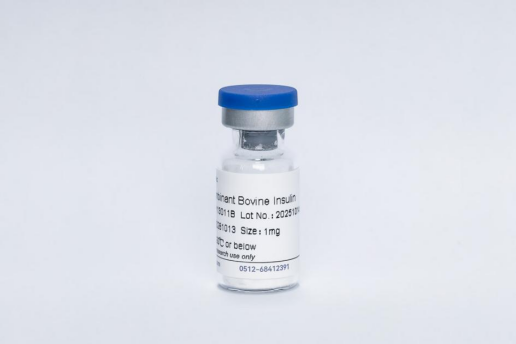
Recombinant bovine insulin is widely used across a range of applications where efficient cell growth and metabolic control are essential. In biopharmaceutical manufacturing, it supports high-density cell cultures, enabling increased production of therapeutic proteins while maintaining product quality. In cell therapy workflows, including the expansion of T cells and stem cells, insulin contributes to consistent cell proliferation and viability, which are critical for clinical success. The cultivated meat industry also relies on recombinant insulin to support the growth of muscle and fat cells in vitro, providing a scalable alternative to traditional animal agriculture. Additionally, in tissue engineering and regenerative medicine, insulin plays a role in promoting cell survival and facilitating the development of functional tissues.
The inclusion of recombinant bovine insulin in cell culture systems has a direct impact on process efficiency and scalability. By enhancing metabolic activity and promoting cell growth, it enables higher cell densities and more productive cultures, which in turn improve overall manufacturing output. At the same time, its consistency reduces variability between batches, simplifying process optimization and scale-up. These advantages contribute to more predictable production outcomes, lower costs, and shorter development timelines, all of which are critical factors in competitive biopharmaceutical and biotechnology markets.
EastMabBio provides recombinant bovine insulin optimized for high-performance cell culture applications, combining high purity, low endotoxin levels, and verified bioactivity with robust manufacturing capabilities. Produced under stringent quality control systems and supported by GMP-compliant processes, these products are designed to meet the needs of both research and industrial users. In addition to supplying high-quality proteins, EastMabBio offers technical expertise to help customers optimize their cell culture systems, ensuring that recombinant insulin delivers maximum benefit in specific applications.
Recombinant bovine insulin is a fundamental component of modern cell culture systems, providing the metabolic support necessary for efficient cell growth and survival in serum-free conditions. Its defined composition, consistent performance, and scalability make it an essential tool for advancing biopharmaceutical production, cell therapy development, and emerging applications such as cultivated meat.
News
Platform Information Submission-Privacy Agreement
· Privacy Policy
No content yet
Platform Information Statement-Laws and Regulations
· Laws and regulations
Trademark registration of Jiangsu Dongkang Biomedical Technology Co., Ltd.
East Mab
East Mab Bio
东抗生物