
Blog
How Recombinant Laminin Supports iPSC Culture and Scalable Cell Therapy Developmen
2026.08.20
Induced pluripotent stem cells have reshaped what feels possible in regenerative medicine and disease modeling, and the impact is tangible in day-to-day experiments. Our work at EastMabBio focuses on supplying the high-quality recombinant proteins that keep iPSC generation and differentiation consistent and robust. These cells carry real weight in therapy development and drug discovery, so precision and reproducibility matter. Here we cover the core principles, the technical routes used to generate iPSCs, and their broad applications, highlighting why they continue to drive biomedical research forward.
Understanding Induced Pluripotent Stem Cells
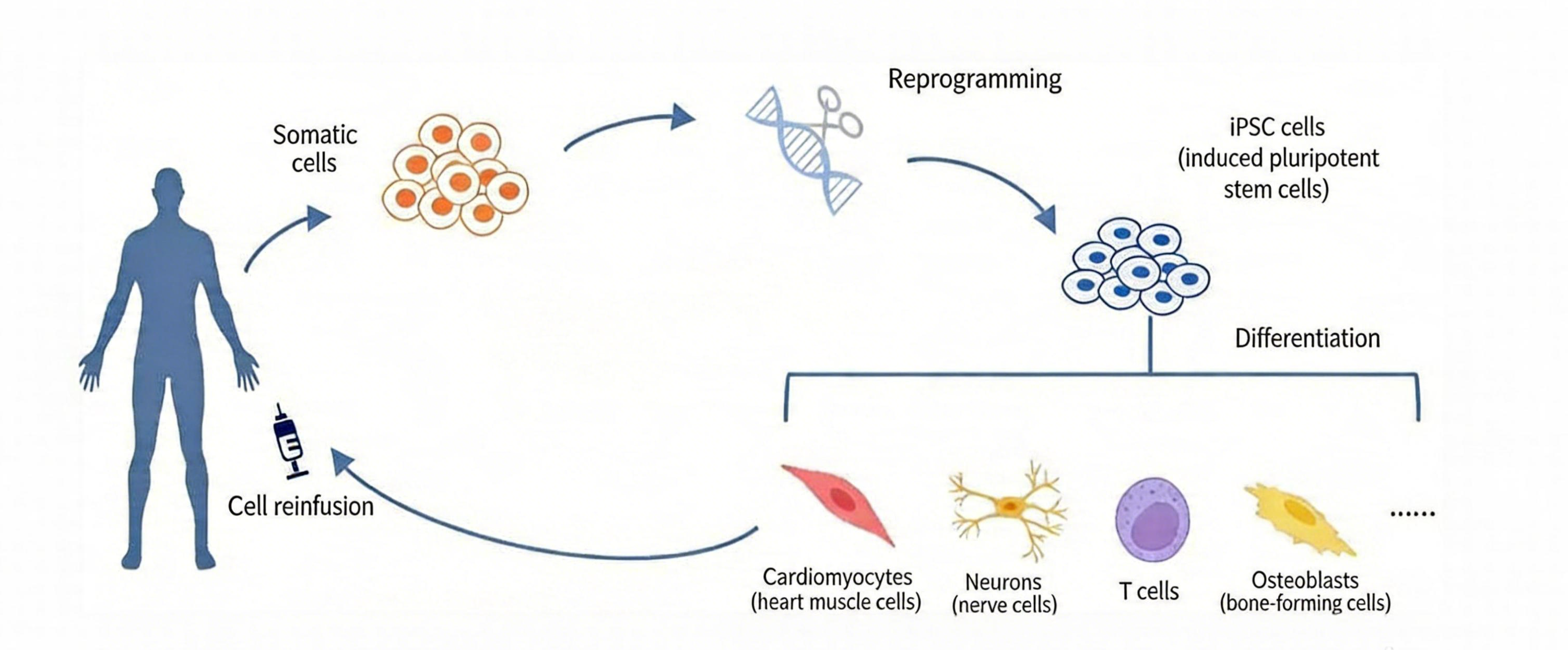
Induced pluripotent stem cells (iPSCs) are a type of pluripotent stem cell artificially derived from non-pluripotent somatic cells. Shinya Yamanaka’s groundbreaking work in 2006 demonstrated that introducing specific reprogramming factors could revert adult cells into an embryonic stem cell-like state. This discovery revolutionized stem cell biology by offering an ethical and patient-specific alternative to embryonic stem cells. iPSCs possess the unique ability to self-renew indefinitely and differentiate into any cell type of the three germ layers. This pluripotency makes them invaluable for understanding developmental processes, modeling complex diseases, and developing novel cell therapies. The reprogramming process involves a complex interplay of genetic and epigenetic changes, leading to the activation of pluripotency-associated genes and the suppression of somatic cell-specific genes.
Technical Principles of iPSC Generation
Generating iPSCs involves introducing specific transcription factors into somatic cells. The most commonly used factors, often referred to as Yamanaka factors, include Oct4, Sox2, Klf4, and c-Myc. Various methods exist for delivering these reprogramming factors, each with distinct advantages and safety profiles.
Method | Delivery Mechanism | Efficiency | Safety Profile | Key Considerations |
Retroviral Vectors | RNA virus integration | High | Insertional mutagenesis | Not suitable for clinical applications |
Sendai Virus | RNA virus, non-integrating | High | Immunogenic | Transient expression, safer for research |
Episomal Vectors | Plasmid, non-integrating | Moderate | Integration-free | Lower efficiency, requires repeated transfection |
Applications of iPSCs in Biomedical Research
The versatility of iPSCs has opened numerous avenues in biomedical research. They are widely used for iPSC disease models, allowing scientists to generate patient-specific cells carrying genetic mutations associated with various conditions. This enables the study of disease mechanisms in a physiologically relevant context. In drug discovery iPSCs, these cells facilitate high-throughput screening of compounds, identifying potential therapeutic agents and assessing drug toxicity with greater accuracy.
iPSCs also hold immense promise in regenerative medicine iPSCs and cell therapy development. They can differentiate into specialized cell types, such as neurons, cardiomyocytes, or pancreatic beta cells, which can then be used to replace damaged tissues or organs. Organoid technology, derived from iPSCs, creates three-dimensional mini-organs that mimic human tissue structure and function, providing advanced platforms for disease modeling and drug testing. This capacity to generate diverse cell types from a single source offers unprecedented opportunities for personalized medicine.
Advancements and Future Directions in iPSC Technology
The field of iPSC technology continues to evolve rapidly, driven by innovations in gene editing and cell manufacturing. Significant progress has been made in iPSC gene editing techniques, including CRISPR, to correct genetic defects in patient-derived iPSCs, paving the way for gene-corrected cell therapies. The development of universal iPSCs, which are immune-compatible and can be transplanted into any recipient without rejection, is a major focus. This involves strategies like HLA gene editing to reduce immunogenicity.
Efforts are also underway to achieve iPSC manufacturing scale up for clinical trials and commercial applications. This requires developing automated, standardized, and cost-effective methods for iPSC generation, expansion, and differentiation. Navigating the regulatory pathways iPSCs for clinical translation remains a critical challenge, necessitating clear guidelines for safety and efficacy. Future developments include advanced bioengineering techniques to create more complex tissue constructs and the integration of artificial intelligence for optimizing iPSC differentiation protocols, ultimately accelerating the path to clinical implementation.
Optimizing iPSC Research with High-Quality Reagents
The success and reproducibility of iPSC research heavily depend on the quality of raw materials used. High-quality recombinant proteins iPSC and cell culture components are indispensable for efficient iPSC generation, maintenance, and differentiation. We understand that precise control over the cellular microenvironment is crucial.
Name | Cat# | Species | Expression System | Purity | Endotoxin(EU/mg) |
FGF-2 | Y00351H | Human | E. coli | ≥95% | ≤10 |
(GMP)G027-250UG | Human | E. coli | ≥95% | ≤10 | |
Activin A | Y00101N | Human | CHO | ≥95% | ≤10 |
(GMP)G012-50UG | Human | CHO | ≥95% | ≤10 | |
LR3-IGF1 | Y03101 | Human | CHO | ≥95% | ≤10 |
(GMP)G009-250UG | Human | CHO | ≥95% | ≤10 | |
EGF | Y00801 | Human | CHO | ≥95% | ≤10 |
(GMP)G010-250UG | Human | CHO | ≥95% | ≤10 | |
TGF-β1 | Y04201N | Human | CHO | ≥95% | ≤10 |
(GMP)G016-50UG | Human | CHO | ≥95% | ≤10 | |
IL-2 | Y02001N | Human | CHO | ≥95% | ≤1 |
(GMP)G007-100UG | Human | CHO | ≥95% | ≤1 |
Our portfolio includes a range of recombinant proteins critical for xeno-free iPSC culture, ensuring minimal variability and enhanced safety for clinical applications. For instance, our Recombinant Human FGF-2/bFGF is critical for maintaining iPSC pluripotency and supporting cell proliferation. We also offer various iPSC growth factors and cytokines, such as Recombinant Human TGF-β1, which reliably promotes the expansion of induced pluripotent stem cells (iPSCs), and Recombinant Human Activin A, which effectively drives the definitive endoderm differentiation of iPSCs. These high-purity iPSC media components are rigorously tested to meet stringent quality standards, providing researchers with reliable tools for their groundbreaking work.
Frequently Asked Questions
1.What are the primary advantages of using Induced Pluripotent Stem Cells over other stem cell types?
iPSCs offer significant advantages over other stem cell types, particularly embryonic stem cells (ESCs). They circumvent ethical concerns associated with ESCs as they are derived from adult somatic cells. iPSCs are also patient-specific, allowing for the creation of autologous cell therapies, which reduces the risk of immune rejection. Their ability to model diseases in a genetically identical background is a major benefit.
2.How do recombinant proteins enhance the efficiency and safety of iPSC culture?
Recombinant proteins are crucial for optimizing iPSC culture by providing defined, xeno-free conditions. They replace animal-derived components, reducing the risk of contamination and immunogenicity, which is vital for clinical translation. Specific recombinant growth factors iPSC and cytokines iPSC precisely guide cell proliferation, self-renewal, and differentiation, leading to more efficient and reproducible outcomes in iPSC generation and maintenance.
3.What are the major challenges in translating iPSC research into clinical therapies?
Translating iPSC research into clinical therapies faces several challenges. These include ensuring the genetic stability and safety of iPSCs, particularly concerning tumorigenicity. The standardization of iPSC manufacturing scale up and differentiation protocols is also critical. Overcoming regulatory hurdles and developing cost-effective production methods are essential for widespread clinical adoption.
4.Can iPSCs be used to model complex human diseases accurately?
Yes, iPSCs are highly effective for modeling complex human diseases. By reprogramming patient-specific somatic cells into iPSCs, researchers can generate relevant cell types (e.g., neurons for neurological disorders, cardiomyocytes for cardiac diseases) that retain the patient’s genetic background. This allows for the study of disease mechanisms, identification of biomarkers, and testing of potential therapies in a human-specific context.
5.What quality control measures are crucial for iPSC-derived products?
Crucial quality control measures for iPSC-derived products include verifying pluripotency through marker expression and differentiation assays. Genetic stability must be confirmed through karyotyping and genomic sequencing to detect chromosomal abnormalities or mutations. Additionally, rigorous testing for mycoplasma, bacterial, and viral contamination, along with endotoxin levels, ensures the safety and purity of iPSC-derived cells for research and therapeutic use.
Partner with EastMabBio for Your iPSC Research
Discover how Jiangsu East-Mab Biomedical Technology Co., Ltd. empowers cutting-edge iPSC research and development.
Explore our broad portfolio of high-quality recombinant protein raw materials, essential for robust cell culture, precise differentiation, and scalable therapeutic applications.
Partner with EastMabBio to accelerate your advancements in regenerative medicine, disease modeling, and cell therapy.
Contact us today to discuss your specific reagent needs and leverage our world-class expertise.
Tel: +86-400-998-0106 | Email: product@eastmab.com
News
Platform Information Submission-Privacy Agreement
· Privacy Policy
No content yet
Platform Information Statement-Laws and Regulations
· Laws and regulations
Trademark registration of Jiangsu Dongkang Biomedical Technology Co., Ltd.
East Mab
East Mab Bio
东抗生物


