
Blog
Recombinant Human 4-1BBL: Unlocking Immune Co-stimulation for Advanced Therapies
2026.01.13
High-quality growth factors matter in bioprocessing and cell culture. LR3 IGF-1 stands out here. When the analog works as intended, cell proliferation improves and protein yields follow. This piece covers what makes LR3 IGF-1 effective, how it differs from native IGF-1, and where it fits across applications from biopharmaceutical production to cultivated meat.
How LR3 IGF-1 Drives Cell Proliferation
Recombinant Human LR3 IGF-1 is a potent analog of insulin-like growth factor 1 (IGF-1), engineered for enhanced biological activity and stability in cell culture systems. Its primary mechanism involves binding to the insulin-like growth factor 1 receptor (IGF-1R), a receptor tyrosine kinase. This binding initiates a cascade of intracellular signaling events crucial for cell growth and survival. Upon activation, IGF-1R phosphorylates downstream adaptor proteins, leading to the activation of two major signaling pathways: the PI3K/Akt signaling pathway and the MAPK pathway.
The PI3K/Akt pathway sits at the center of cell survival and metabolism. Akt activation promotes cell growth regulation by inhibiting pro-apoptotic factors and stimulating protein synthesis. The MAPK pathway, involving ERK1/2, gets activated simultaneously, driving cell proliferation and differentiation. This dual activation produces robust cell growth and viability, which explains why LR3 IGF-1 shows up in so many cell culture applications. The sustained activation from LR3 IGF-1’s unique structure generates stronger proliferative responses than native IGF-1 typically delivers.
Getting More from Cell Culture and Bioreactor Systems
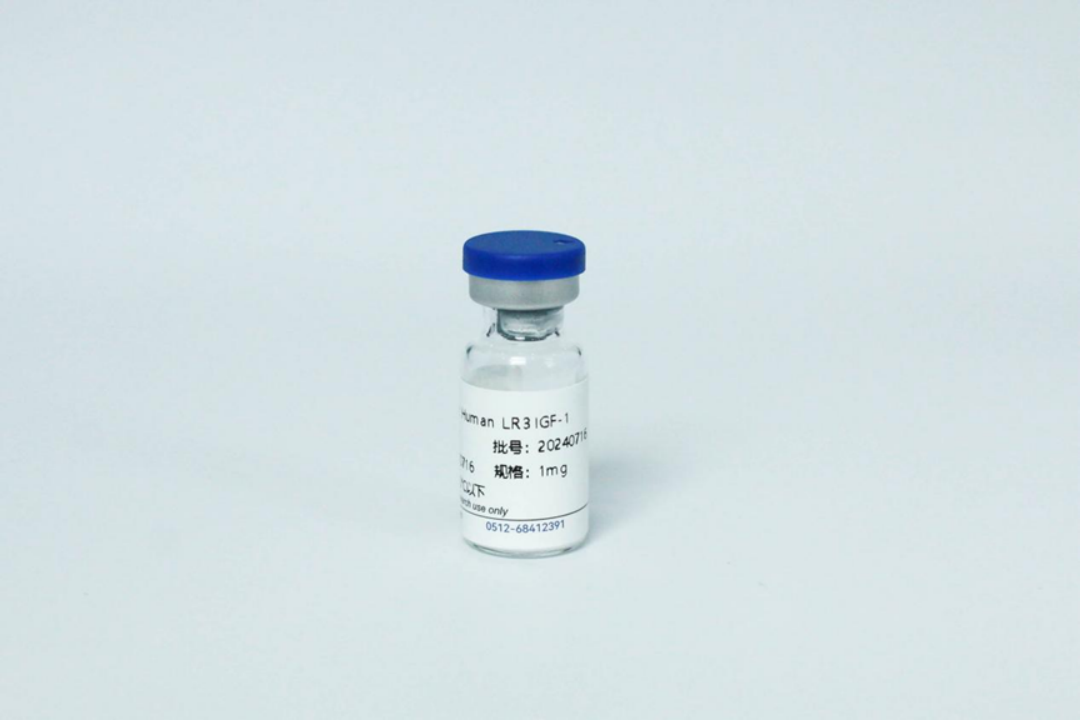
EastMabBio’s high-purity LR3 IGF-1 targets cell culture media optimization and bioreactor productivity improvements. The product minimizes batch variability, a persistent headache in biomanufacturing, and supports consistent, reproducible results. LR3 IGF-1 extends cell viability and boosts recombinant protein expression across diverse cell lines. This translates to higher protein yield enhancement in biopharmaceutical production.
In CHO cell cultures, a workhorse for recombinant protein production, LR3 IGF-1 promotes sustained growth even under challenging conditions. That sustained growth directly increases volumetric productivity and improves product quality. Data consistently show that incorporating EastMabBio’s LR3 IGF-1 into serum-free media formulations results in superior cell densities and metabolic efficiency. This optimization matters for achieving cost-effective and scalable biomanufacturing processes.
Quality Attributes That Matter for Recombinant LR3 IGF-1
High-quality recombinant protein raw materials remain non-negotiable for regulatory compliance and reliable experimental outcomes. EastMabBiomaintains stringent quality control measures for LR3 IGF-1. Purity analysis typically achieves >95% purity, with endotoxin levels held at ≤10 EU/mg. Each lot undergoes comprehensive bioactivity assay testing to confirm potency in promoting cell proliferation. Extensive stability testing guarantees product integrity over shelf life, aligning with cGMP standards. These measures provide confidence in consistent LR3 IGF-1 performance.
What LR3 IGF-1 Does for Cell Culture Performance and Yield
Recombinant Human LR3 IGF-1 improves cell culture productivity and biopharmaceutical manufacturing efficiency. The product promotes robust cell growth and reduces apoptosis, particularly in challenging cell culture environments. This leads to increased target protein production across various cell lines. In cell line development, LR3 IGF-1 supports establishment and expansion of high-producing clones. Data-driven insights demonstrate how this growth factor applications contributes to superior process economics and product quality.
What Sets LR3 IGF-1 Apart Structurally and Functionally
Recombinant Human LR3 IGF-1 has molecular characteristics that distinguish it from native IGF-1. The key structural modification is the substitution of Arginine for Glutamic acid at position 3 (Arg3). This specific amino acid modification significantly enhances LR3 IGF-1’s potency and extends its half-life by reducing binding affinity to IGF binding proteins (IGFBPs). Native IGF-1 readily binds to IGFBPs, which sequester the growth factor and limit its bioavailability and biological activity in culture.
Reduced IGFBP binding means more free LR3 IGF-1 remains available to interact with the insulin-like growth factor 1 receptor (IGF-1R), resulting in sustained receptor activation. This prolonged signaling translates to more potent and consistent proliferative effects. Research confirms that this IGF-1 analog offers a distinct advantage in cell culture, providing a more stable and effective growth stimulus. The enhanced pharmacokinetics profile makes LR3 IGF-1 a superior choice for long-term cell culture applications.
LR3 IGF-1 vs Native IGF-1
The structural modification in LR3 IGF-1, specifically the Arg3 substitution, drives its enhanced performance. This alteration prevents LR3 IGF-1 from binding to IGFBPs, which are abundant in serum-containing media and can also be secreted by cells in serum-free systems. By circumventing IGFBP binding, LR3 IGF-1 exhibits increased bioavailability and sustained biological activity within the cell culture environment. This leads to more consistent and robust cell proliferation.
Feature | Native IGF-1 | LR3 IGF-1 |
Structure | 70 amino acids | 83 amino acids (Arg3 substitution, 13-aa extension) |
IGFBP Binding | High affinity | Reduced affinity |
Bioavailability | Limited by IGFBPs | Increased, sustained |
Half-life | Shorter in culture | Extended in culture |
Potency | Lower in presence of IGFBPs | Higher, more consistent |
Applications | General cell growth support | Advanced serum-free media, bioproduction |
EastMabBio’s Approach to Recombinant Protein Quality
EastMabBio established in 2016, is a biotechnology company dedicated to providing high-quality recombinant protein raw materials worldwide. The company began with antibody drug R&D and has transitioned to focusing on recombinant protein raw materials, drawing on deep scientific expertise.
Today, EastMabBioprimarily offers cell culture proteins, IVD diagnostic proteins, and enzymes for pharmaceutical and diagnostic applications, along with related technical services. With support from well-known investment institutions and hundreds of top clients, East Mab Bio has established itself as a credible and reliable global supplier. The company supports advancements in IVD, cell culture media, cell therapy, organoids, cosmetics, and cultivated meat on a global scale, maintaining a robust supply chain for research and manufacturing needs.
Work with EastMabBio on Your Bioprocessing Projects
Improve your bioprocessing and cell culture applications with EastMabBio’s high-purity Recombinant Human LR3 IGF-1. Partner with a global leader in recombinant protein raw materials to achieve consistency, performance, and scalability. Contact us for technical specifications and bulk inquiries at product@eastmab.com or +86-400-998-0106.
Frequently Asked Questions
1.What makes EastMabBio’s Recombinant Human LR3 IGF-1 superior for biopharmaceutical applications?
EastMabBio’s Recombinant Human LR3 IGF-1 is produced using a world-class platform, ensuring exceptional purity, high biological activity, and lot-to-lot consistency. Stringent recombinant protein quality control measures and advanced manufacturing processes guarantee a product optimized for biopharmaceutical and cell culture applications, minimizing variability and maximizing yield. Quality remains the priority for demanding projects.
2.How does LR3 IGF-1 contribute to serum-free cell culture media optimization?
LR3 IGF-1 is a potent growth factor that enhances cell proliferation and viability in serum-free and chemically defined media. Its modified structure prevents binding to IGF-binding proteins, increasing bioavailability and extending half-life in culture. This promotes sustained cell growth and higher productivity in various cell lines, including CHO cells for recombinant protein production, making it well-suited for cell culture media optimization.
3.Can Recombinant Human LR3 IGF-1 be used in organoid and cultivated meat research?
Yes. Recombinant Human LR3 IGF-1 serves as a component in advanced biological research, including organoid development and cultivated meat applications. Its ability to stimulate cell growth and differentiation makes it a useful raw material for creating complex 3D tissue structures and optimizing cell propagation for sustainable food technologies. EastMabBioprovides high-quality LR3 IGF-1 to support these fields globally.
Platform Information Submission-Privacy Agreement
· Privacy Policy
No content yet
Platform Information Statement-Laws and Regulations
· Laws and regulations
Trademark registration of Jiangsu Dongkang Biomedical Technology Co., Ltd.
East Mab
East Mab Bio
东抗生物