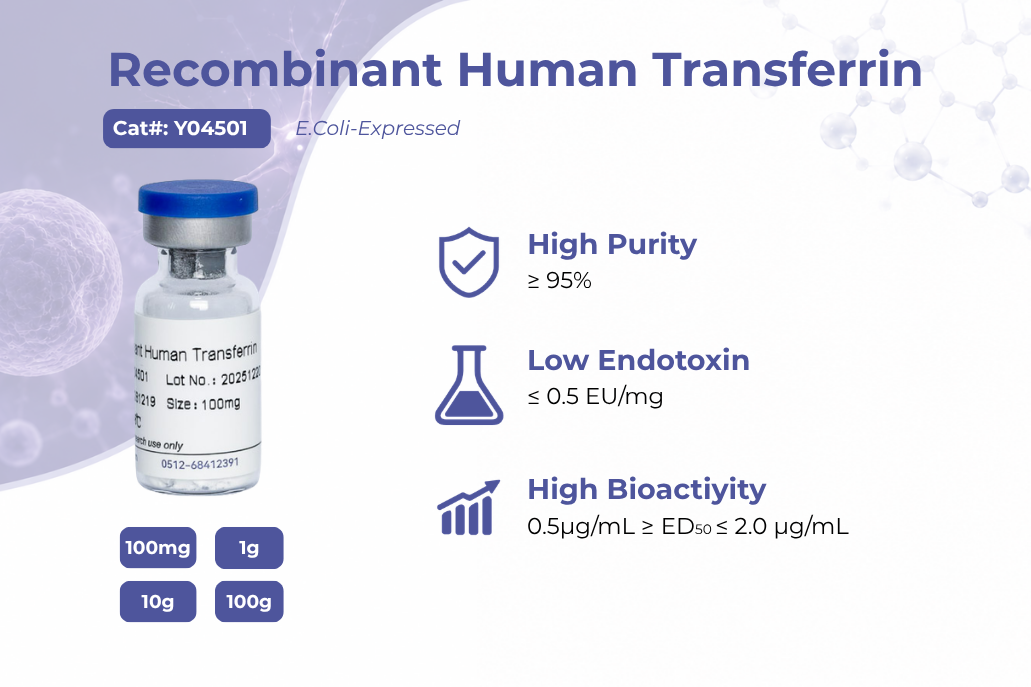
Working with recombinant mouse M-CSF feels different from handling most cytokines. The protein sits at the center of so many macrophage-dependent processes that getting the quality right matters more than usual. I’ve watched experiments fail simply because the M-CSF lost activity during storage, and I’ve seen beautiful differentiation data come from batches that were handled properly from the start. This piece walks through what makes murine M-CSF work, how to use it effectively, and what quality markers actually predict success in the culture dish.
Recombinant mouse M-CSF goes by another name in the literature: Colony-Stimulating Factor 1, or CSF-1. The protein forms a homodimer, and glycosylation affects its stability and receptor binding. What it does is straightforward in concept but complex in execution. M-CSF drives monocytes toward becoming macrophages, keeps those macrophages alive, and pushes progenitor cells down the myeloid path.
The mechanism starts when M-CSF binds its receptor, CSF1R. This receptor belongs to the tyrosine kinase family and shows up mainly on monocytes and macrophages. Binding causes the receptor to pair up and phosphorylate itself, which kicks off several downstream cascades. The MAPK/ERK pathway gets activated. So does PI3K/Akt. STAT signaling joins in. Together, these pathways control which genes turn on and how strongly, ultimately determining whether a cell differentiates, survives, or proliferates.
The biological reach of murine M-CSF extends across multiple tissue types. Kupffer cells in the liver depend on it. Microglia in the brain need it for maintenance. Osteoclasts in bone require M-CSF alongside RANKL to form properly. When M-CSF signaling goes wrong, the consequences show up in inflammatory diseases, autoimmune conditions, and certain cancers. Knowing these details helps explain why purity and bioactivity matter so much when you’re trying to reproduce physiological conditions in culture.

The difference between a successful differentiation experiment and a failed one often comes down to recombinant mouse M-CSF quality. Purity matters first. A protein preparation should exceed 95% purity by SDS-PAGE or HPLC. Contaminants introduce variables you cannot control, and they make results harder to interpret.
Endotoxin contamination creates particular problems. Macrophages respond to endotoxin with activation signals that have nothing to do with your experimental design. For sensitive work, endotoxin levels need to stay below 1 EU/mg. This becomes even more critical for in vivo applications, where systemic inflammatory responses can confound everything.
Bioactivity testing tells you whether the protein actually works. For M-CSF, the standard assay measures proliferation of M-NFS-60 cells or tracks macrophage differentiation in culture. A protein can look pure on a gel and still lack functional activity if it was misfolded during production or degraded during storage. Lot-to-lot consistency in bioactivity saves time and frustration over the course of a long project.
Stability affects how long you can trust your reagent. Proper manufacturing under controlled conditions, following established quality standards, produces protein that maintains activity throughout its stated shelf life. Cutting corners during production shows up later as inconsistent results.
The most common application involves differentiating bone marrow monocytes into macrophages. This gives researchers a renewable source of primary-like macrophages for studying phagocytosis, cytokine production, polarization states, and pathogen interactions. The resulting cells respond to additional stimuli in ways that reflect normal macrophage biology.
Myeloid cell lines also benefit from M-CSF supplementation. Maintaining these cells in culture requires the right growth signals, and M-CSF provides what the monocyte-macrophage lineage needs. Hematopoiesis studies use M-CSF to push progenitors toward myeloid fates rather than other lineages.
Cell therapy development increasingly relies on M-CSF. Generating macrophages or dendritic cells for adoptive transfer requires consistent differentiation protocols, and M-CSF sits at the center of many of them. Vaccine development work uses M-CSF-derived cells as antigen-presenting platforms.
Diagnostic applications exist too. Some assay formats require specific cell populations, and M-CSF helps generate them reproducibly. Disease modeling represents another major use case. Cancer researchers study tumor-associated macrophages. Cardiovascular researchers examine macrophage roles in atherosclerosis. Neuroscientists investigate microglial contributions to neurodegeneration. All of these applications depend on reliable M-CSF.
Organoid culture has emerged as a newer application area. Adding macrophages to organoid systems creates more physiologically complete models. Drug screening in these systems benefits from having immune components present, and M-CSF makes that possible.
Reconstitution deserves attention. Follow the manufacturer’s protocol exactly. Use sterile, endotoxin-free buffer. Work quickly to minimize time at room temperature. Once reconstituted, divide the solution into single-use aliquots. Each freeze-thaw cycle damages protein structure and reduces activity. Store aliquots at -20°C or -80°C.
Adding M-CSF to culture media requires sterile technique throughout. Contamination ruins experiments and wastes expensive reagent. The optimal concentration depends on what you’re trying to achieve and which cells you’re using.
| Application | Recommended M-CSF Concentration (ng/mL) | Cell Type |
|---|---|---|
| Macrophage Differentiation | 20-100 | Bone Marrow Monocytes |
| Osteoclast Formation | 25-50 | RAW 264.7 cells |
| Microglia Maintenance | 10-20 | Primary Microglia |
| Myeloid Cell Proliferation | 5-20 | Myeloid Progenitors |
These numbers serve as starting points. Running a dose-response curve for your specific system saves time in the long run. Too little M-CSF produces incomplete differentiation. Too much can alter cell phenotypes in unexpected ways. Watch cell morphology and proliferation rates to gauge whether your concentration works.

Jiangsu East-Mab Biomedical Technology Co., Ltd. has built its reputation on recombinant protein quality since 2016. The production platform combines modern expression systems with purification methods designed to preserve bioactivity. Each batch goes through bioactivity assays, endotoxin testing, and purity analysis before release.

The company supplies raw materials for IVD manufacturing, cell culture media formulation, and cell therapy development. Investment in R&D and production capacity reflects a commitment to meeting the quality standards that sensitive applications require. Researchers working with East Mab Bio’s recombinant mouse M-CSF can expect consistency across lots and documentation that supports regulatory submissions where needed.
The same properties that make M-CSF useful in research are attracting attention for therapeutic development. Macrophages influence tumor behavior, and modulating their function through M-CSF signaling represents one approach to cancer immunotherapy. Reprogramming tumor-associated macrophages could shift the balance toward anti-tumor immunity.
Autoimmune diseases involve macrophage-driven inflammation. Targeting M-CSF pathways might reduce pathological inflammation while preserving necessary immune functions. The challenge lies in achieving selective effects without compromising host defense.
Regenerative medicine applications are being explored. Macrophages participate in tissue repair, and recruiting the right macrophage populations through M-CSF could enhance healing. The timing and context matter enormously, which is why basic research continues alongside translational work.
Cell therapy manufacturing uses M-CSF to expand and differentiate cells outside the body. Scaling these processes requires reliable reagents that perform consistently at larger volumes. Organoid development benefits similarly from M-CSF that supports immune cell integration into complex tissue models.
Cultivated meat research represents an unexpected application area. Muscle stem cell proliferation and differentiation might be optimized through growth factor supplementation, and M-CSF could play a role in certain production strategies.
Jiangsu East-Mab Biomedical Technology Co., Ltd. provides recombinant mouse M-CSF alongside an extensive portfolio of cell culture proteins, diagnostic proteins, and enzymes. For project discussions or technical questions, reach the team at +86-400-998-0106 or product@eastmab.com.
What are the critical quality attributes for recombinant mouse M-CSF in research applications?
Purity should exceed 95% to ensure the biological effects you observe come from M-CSF rather than contaminants. Endotoxin levels need to stay at or below 1 EU/mg to prevent inflammatory artifacts in cell cultures. Bioactivity confirmation through assays like M-NFS-60 proliferation verifies that the protein actually functions. Stability and proper characterization round out the quality picture, supporting reproducibility across experiments.
How does recombinant mouse M-CSF contribute to macrophage differentiation and immune cell studies?
M-CSF binds its receptor on monocyte-lineage cells and triggers signaling cascades that drive differentiation toward mature macrophages. This process underlies most in vitro macrophage generation protocols. Researchers can push the resulting cells toward M1 or M2 polarization states to study inflammatory responses, tissue repair mechanisms, or pathogen clearance. The consistency of M-CSF-driven differentiation makes it a foundation for immunological research.
Where can I find high-purity recombinant mouse M-CSF suitable for sensitive cell culture experiments?
Sourcing from manufacturers with documented quality control processes matters most. East Mab Bio produces recombinant mouse M-CSF with low endotoxin levels and verified bioactivity, specifically designed for applications like macrophage differentiation where quality directly affects outcomes.
What is the typical shelf life and storage conditions for recombinant mouse M-CSF?
Lyophilized recombinant mouse M-CSF typically remains stable for 12-24 months at -20°C or -80°C. After reconstitution, aliquot the solution and store frozen. Avoid repeated freeze-thaw cycles. Following these practices maintains bioactivity throughout the product’s useful life.
Can recombinant mouse M-CSF be used in both in vitro and in vivo studies?
Both applications are common. In vitro work includes macrophage differentiation and immune cell culture maintenance. In vivo studies examine hematopoiesis, osteoclast formation, and immune responses in animal models. In vivo applications place additional demands on purity and endotoxin levels to avoid confounding systemic effects.
Platform Information Submission-Privacy Agreement
· Privacy Policy
No content yet
Platform Information Statement-Laws and Regulations
· Laws and regulations
Trademark registration of Jiangsu Dongkang Biomedical Technology Co., Ltd.
East Mab
East Mab Bio
东抗生物