
Blog
Gastric Organoid Culture: Building a More Defined and Reproducible 3D Culture System
2026.08.18
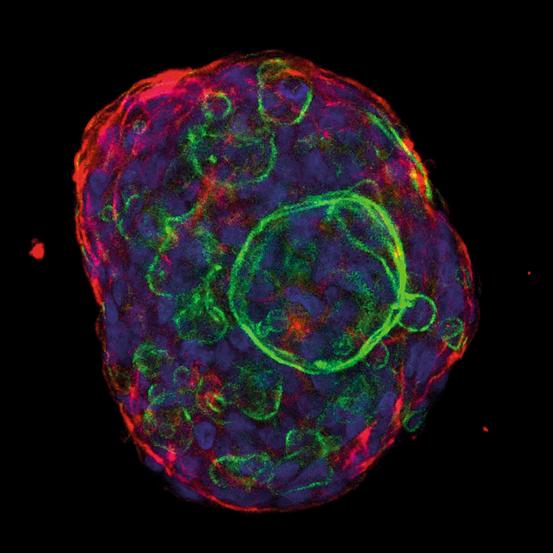
Liver organoids, often called ‘mini-livers’, are three-dimensional (3D) cellular structures that mimic the native human liver’s architecture and functions in vitro, and they’ve become a go-to when standard models fall short. Here, we define liver organoids, sketch the field’s development, and outline the scientific principles that shape their formation and functionality. That context helps explain their impact across modern biology and medicine, from drug discovery and toxicology to disease modeling and regenerative strategies.
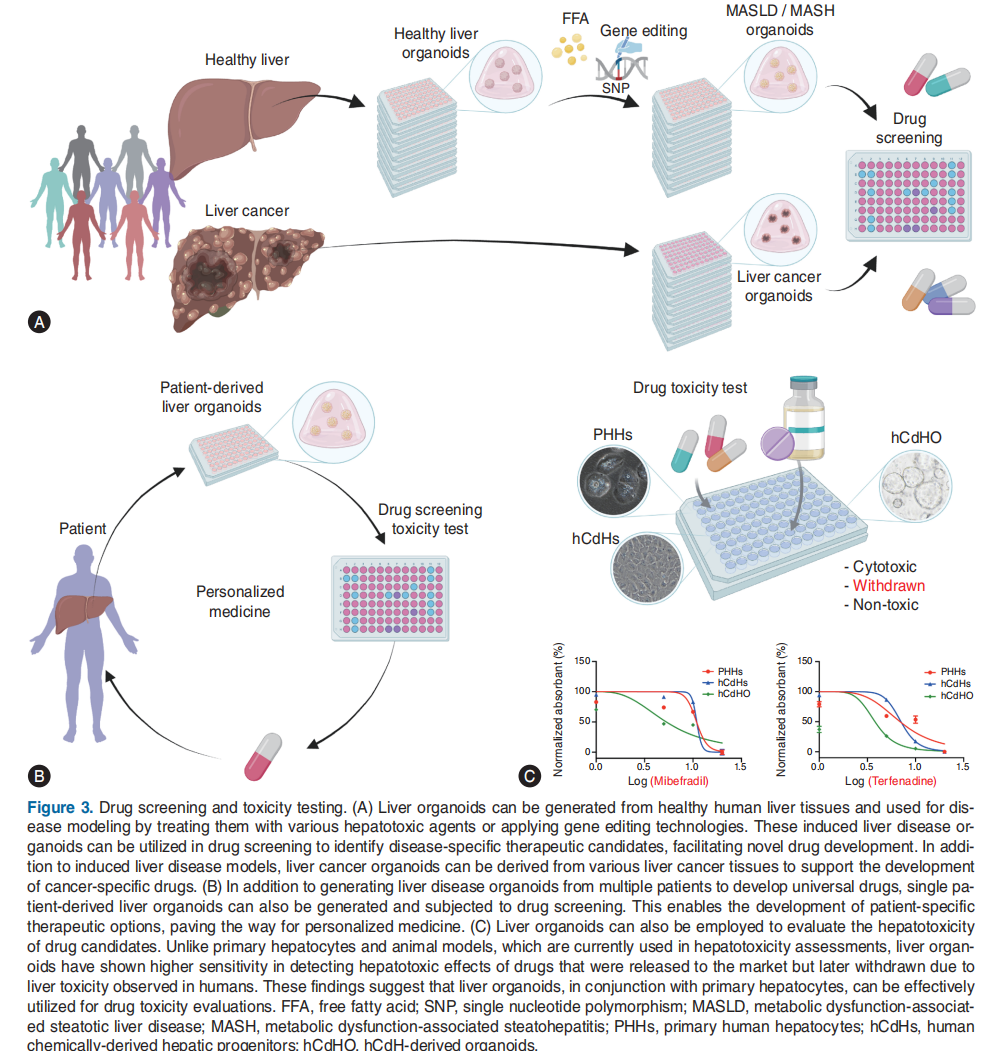
Creating functional liver organoids calls for a solid grasp of developmental biology and tissue engineering. It relies on defined cell sources and tightly controlled culture conditions to steer self-organization into complex 3D structures. Here we map the cellular origins used to generate liver organoids and lay out the components and protocols that support successful culture, underscoring the role of the extracellular matrix and growth factors in driving maturation and physiological relevance.
Liver organoids can be derived from pluripotent stem cells, adult liver progenitor cells, or directly reprogrammed somatic cells. By mimicking the natural embryonic development process (endoderm → hepatoblast → mature hepatocyte), these cells self-organize within a three-dimensional microenvironment to form organoid structures with liver-specific functions.
Recombinant proteins used in liver organoid culture are designed to mimic the signaling environment of liver development and regeneration, supporting cell differentiation, proliferation, and functional maturation. During the early induction stage, factors such as Activin A, BMP4, and members of the FGF family promote definitive endoderm formation and hepatoblast specification. Organoid expansion and stemness maintenance rely on regulators of the Wnt and BMP pathways, including EGF, R-spondin 1, Wnt3a, and Noggin. In the maturation stage, proteins such as HGF and Oncostatin M enhance hepatic functional phenotypes, including albumin secretion and metabolic enzyme activity. Together, these recombinant proteins establish a signaling network that closely resembles the in vivo liver microenvironment and are essential for generating stable and functional liver organoids. The following are recombinant proteins that support liver organoid culture:
Name | Cat# | Species | Expression System | Purity | Endotoxin |
Activin A | Y00101N | Human | CHO | ≥95% | ≤10 EU/mg |
FGF-2 | Y00351H | Human | E. coli | ≥95% | ≤20 EU/mg |
FGF-4 | Y00901/Y00921H | Human | CHO/E. coli | ≥95% | ≤10 EU/mg |
BMP-4 | Y00521H | Human | E. coli | ≥95% | ≤10 EU/mg |
HGF | Y01701 | Human | CHO | ≥95% | ≤10 EU/mg |
EGF | Y00801 | Human | CHO | ≥95% | ≤10 EU/mg |
R-Spondin-1 | Y03501 | Human | CHO | ≥95% | ≤10 EU/mg |
Wnt3a | Y04603 | Human | CHO | ≥95% | ≤100 EU/mg |
Noggin | Y03301 | Human | CHO | ≥95% | ≤10 EU/mg |
FGF-10 | Y01101/Y01121H | Human | CHO/E. coli | ≥95% | ≤10 EU/mg |
FGF-19 | Y11621H | Human | E. coli | ≥95% | ≤10 EU/mg |
OSM | Y05101 | Human | CHO | ≥95% | ≤10 EU/mg |
Liver organoids have emerged as powerful in vitro models, reshaping multiple areas of biomedical research. They offer a more physiologically relevant alternative to traditional 2D cell cultures and animal models for studying liver function and disease. Here we look across the range of applications, from accelerating drug discovery and toxicology screening to unraveling disease mechanisms and advancing regenerative medicine, showing why this platform is changing practice.
Liver organoids are increasingly utilized in pharmaceutical research for high-throughput drug screening, efficacy testing, and predicting drug-induced liver injury (DILI) more accurately than conventional methods. This reduces attrition rates in drug development and improves patient safety.
Liver organoids significantly contribute to understanding the etiology and progression of various liver diseases. These include non-alcoholic fatty liver disease (NAFLD), hepatitis, and liver cancer. They provide patient-specific models for studying disease mechanisms and testing novel therapeutic strategies.
Liver organoids represent a monumental leap forward in biomedical research. However, their widespread adoption and full potential are still being realized. This necessitates continued innovation to address current limitations and expand their capabilities. This section will critically evaluate the existing challenges in liver organoid technology, such as scalability and vascularization. We will also project the exciting future trends, including the integration with ‘organ-on-a-chip’ platforms and their eventual clinical translation, outlining the path forward for this dynamic field.
Explore EastMabBio’s comprehensive range of high-quality recombinant protein raw materials, essential for advancing your liver organoid research and development. Contact us today to learn how our products can support your innovative projects.
Email: product@eastmab.com
Phone: +86-400-998-0106
Liver organoids offer a more physiologically relevant model by mimicking the 3D architecture, cell-cell interactions, and functional complexity of the native liver. This leads to more accurate predictions in drug screening and disease modeling compared to flat 2D cultures. Studies consistently demonstrate the superior predictive power of 3D organoid models.
Recombinant proteins, such as growth factors and cytokines, are indispensable for guiding stem cell differentiation into specific hepatic lineages. They also support the long-term viability and functional maturation of liver organoids in culture, ensuring their physiological relevance. EastMabBio offers a range of high-purity recombinant proteins vital for these processes.
Key challenges include standardizing culture protocols, ensuring batch-to-batch consistency, and developing cost-effective and efficient bioreactor systems for mass production. Additionally, maintaining organoid viability and functionality during scale-up remains a significant hurdle for widespread adoption.
Yes, liver organoids derived from patient-specific induced pluripotent stem cells (iPSCs) hold immense potential for personalized medicine. They allow researchers to create ‘disease in a dish’ models to test drug efficacy and toxicity tailored to an individual’s genetic makeup, offering a powerful platform for precision medicine.
Jiangsu East-Mab Biomedical Technology Co., Ltd. provides high-quality recombinant protein raw materials, including essential growth factors and cytokines. These are critical for the differentiation, growth, and maintenance of liver organoids. This directly supports advancements in drug discovery, disease modeling, and regenerative medicine research globally.
News
Platform Information Submission-Privacy Agreement
· Privacy Policy
No content yet
Platform Information Statement-Laws and Regulations
· Laws and regulations
Trademark registration of Jiangsu Dongkang Biomedical Technology Co., Ltd.
East Mab
East Mab Bio
东抗生物


