
Promotions
New Arrival | East-Mab Bio Launches Brucellosis BP26 Protein – Clinical Sample Specificity Reaches 99.4%!
2025.07.25
As stem cell therapy, organoid research, and tissue engineering continue to advance, the demand for animal-free and chemically defined cell culture supplements is increasing across upstream research and development.
As a classic multifunctional regulatory factor, recombinant human growth hormone (rhGH) has long been studied for its role in endocrine physiology and is increasingly being investigated as a functional supplement in in vitro cell culture systems.
After reaching target tissues through the bloodstream, growth hormone binds to the growth hormone receptor (GHR) on the cell surface. GHR activation subsequently engages JAK2, forming an activated signaling complex that recruits downstream signaling proteins and initiates multiple intracellular pathways.
Through these signaling mechanisms, growth hormone can regulate cellular proliferation, metabolism, differentiation, and functional maintenance in responsive cell types. This makes recombinant human growth hormone a potential component of optimized stem cell and serum-free cell culture systems.
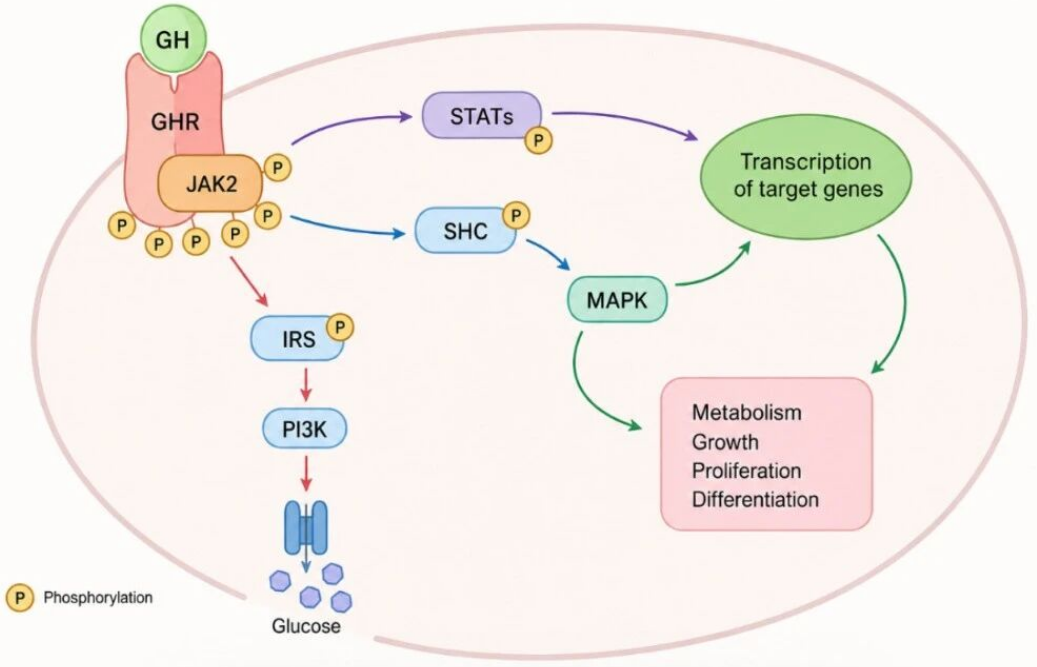
Growth hormone (GH) is a protein hormone secreted primarily by the anterior pituitary gland. Human GH consists of 191 amino acids and plays important roles in growth regulation, cellular metabolism, tissue development, and regeneration.
Recombinant human growth hormone (rhGH) is produced using recombinant DNA technology. Its amino acid sequence is designed to correspond to that of native human growth hormone.
Commercial rhGH can be produced using different expression platforms, including Escherichia coli (E. coli) and mammalian cell systems such as CHO cells and HEK293 cells.
Different expression systems offer different manufacturing characteristics. Prokaryotic systems such as E. coli can provide high expression levels and cost-efficient production, while mammalian expression systems can provide a more physiologically relevant protein production environment and may be preferred for applications where protein structure and post-translational characteristics are important.
For research applications involving stem cell culture, serum-free media, and chemically defined culture systems, expression system, purity, biological activity, endotoxin level, and formulation should all be considered when selecting recombinant growth hormone.
In cell culture applications, rhGH can function as a bioactive culture supplement for specific cell types that express growth hormone receptors.
By interacting with GHR and activating intracellular signaling pathways, rhGH may influence cellular proliferation, differentiation, metabolism, and functional maintenance.
Its potential applications in cell culture include the following.
In certain GHR-expressing mesenchymal-derived cells, GH/GHR signaling can contribute to cellular growth and proliferation. Its biological effects may also involve downstream mediators such as insulin-like growth factor 1 (IGF-1).
As part of a serum-free or chemically defined cell culture system, rhGH can be combined with other growth factors, hormones, and nutritional components to support the development of more defined culture formulations and reduce reliance on animal-derived serum components.
For mesenchymal stem cell (MSC) expansion, the selection and concentration of growth factors should be optimized according to the cell source, culture conditions, and intended application.
Growth hormone signaling has also been investigated in the differentiation of stem and progenitor cells, particularly through interactions between the GH–IGF-1 axis and lineage-specific signaling pathways.
In specific osteogenic induction systems, the GH/IGF-1 axis may participate in the regulation of MSC osteogenic differentiation.
Studies have investigated the potential association of GH signaling with osteogenic markers including:
These markers are commonly used to evaluate osteogenic commitment and extracellular matrix mineralization during MSC differentiation.
GH/IGF-1 signaling is also involved in cartilage cell metabolism and extracellular matrix regulation.
Under specific differentiation conditions, growth hormone signaling may support the formation of cartilage-associated extracellular matrix components, including type II collagen and glycosaminoglycans (GAGs).
The biological response depends on the cell type, culture formulation, growth factor combination, and experimental conditions.
Some biological effects of growth hormone are mediated directly through GHR signaling, while others involve the GH–IGF-1 axis.
Growth hormone can stimulate IGF-1 production and downstream signaling in responsive cells. Therefore, rhGH may serve as one component of a broader growth-factor strategy when developing defined culture systems.
For researchers optimizing serum-free media or chemically defined media, understanding the interaction between rhGH, IGF-1, and other signaling factors can help guide the selection and optimization of recombinant protein supplements.
EastMabBio recombinant human growth hormone Y07601 is designed for research applications involving cell culture and growth-factor studies.
| Parameter | Specification |
|---|---|
| Product | Recombinant Human Growth Hormone (rhGH) |
| Product Code | Y07601 |
| Expression Region | Phe27–Phe217 |
| UniProt | P01241 |
| Expression System | CHO cells |
| Purity | ≥95%, determined by SDS-PAGE |
| Endotoxin | <1.0 EU/μg |
| Tag | Tag-free |
| Bioactivity | ED50 ≤0.1 ng/mL |
| Specific Activity | ≥10 IU/mg |
| Bioassay | Nb2-11 cell proliferation assay |
Biological activity is an important parameter when selecting recombinant growth factors for cell culture.
EastMabBio rhGH is evaluated using an Nb2-11 cell proliferation assay.
The expected ED50 is ≤0.1 ng/mL, corresponding to a specific activity of ≥10 IU/mg.
Determined by its ability to stimulate the proliferation of Nb2-11 cells. Expected ED50 ≤0.1 ng/mL, corresponding to a specific activity of ≥10 units/mg.
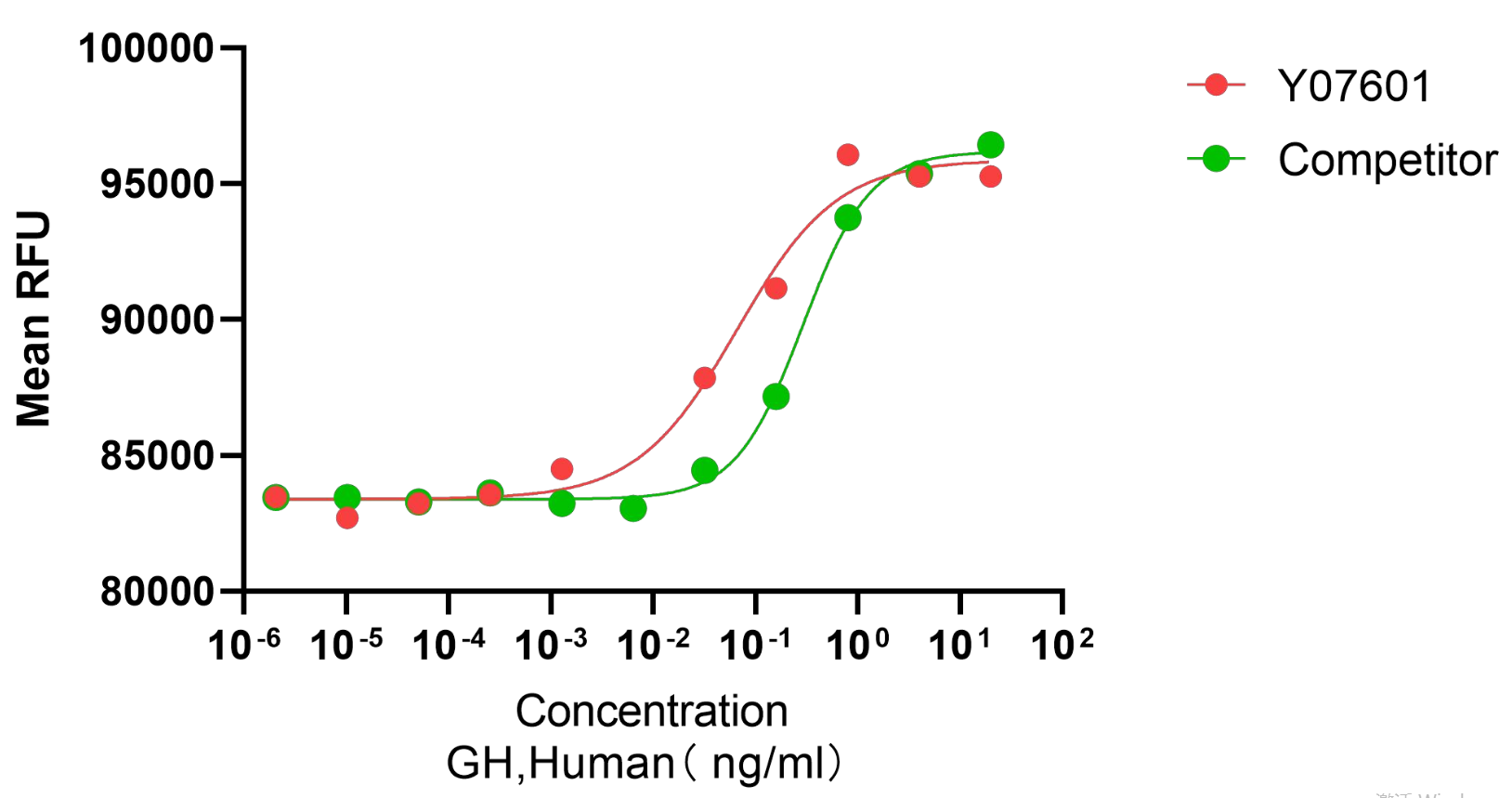
For applications involving sensitive cells, endotoxin is an important quality attribute.
EastMabBio rhGH has an endotoxin level of <1.0 EU/μg, helping researchers maintain tighter control over potential endotoxin-related experimental interference in cell culture applications.
The tag-free design is intended to minimize the influence of additional fusion or purification tags and is suitable for research applications where protein structure and biological function are important considerations.
EastMabBio rhGH is produced using a CHO cell expression system, a widely used mammalian expression platform for recombinant proteins.
This production platform is suitable for researchers looking for recombinant human growth hormone produced using a mammalian cell-based expression system.
EastMabBio rhGH is typically supplied as a lyophilized powder.
After receiving the product:
For specific experimental applications, researchers should optimize the final protein concentration and dilution conditions according to their culture system.
Lyophilized rhGH
After reconstitution
Avoid repeated freeze-thaw cycles.
For long-term storage, aliquoting the reconstituted protein can help minimize repeated freeze-thaw exposure.
Recombinant human growth hormone can be investigated as a functional supplement in a range of research areas, including:
For complex culture systems, rhGH is generally used in combination with other recombinant proteins, growth factors, hormones, and defined media components rather than as a standalone supplement.
As the demand for serum-free, animal-free, and chemically defined cell culture systems continues to grow, recombinant growth factors are becoming increasingly important components of advanced in vitro culture platforms.
Recombinant human growth hormone (rhGH) interacts with GHR and downstream signaling networks, including the JAK2 pathway and GH–IGF-1 axis, and has been investigated for its potential roles in cell proliferation, metabolism, differentiation, and functional maintenance.
For stem cell and tissue engineering research, rhGH may serve as one component of an optimized growth-factor formulation, particularly in research involving MSC expansion, osteogenic differentiation, chondrogenic differentiation, and defined cell culture systems.
EastMabBio rhGH Y07601 combines ≥95% purity, low endotoxin, tag-free design, CHO expression, and high biological activity, providing a recombinant human growth hormone option for research applications in cell culture and regenerative medicine.
News

Platform Information Submission-Privacy Agreement
· Privacy Policy
No content yet
Platform Information Statement-Laws and Regulations
· Laws and regulations
Trademark registration of Jiangsu Dongkang Biomedical Technology Co., Ltd.
East Mab
East Mab Bio
东抗生物


