
Blog
Recombinant Cytokines for Cell Culture: Essential Growth Factors for Biopharmaceutical Manufacturing, Stem Cells, Organoids, and Cell Therapy
2026.07.31
The immune system does not work through isolated cells. Instead, it relies on a highly coordinated network of signaling molecules that allows immune cells to communicate, respond, proliferate, differentiate, and maintain homeostasis. Among these signaling molecules, interleukins (ILs) represent one of the most important families of cytokines. From inflammatory diseases and autoimmune disorders to cancer, infectious diseases, hematopoiesis, and immune-cell therapy, interleukins participate in a remarkably broad range of biological processes.
More importantly, interleukins are not simply “inflammatory molecules.” Different ILs can exert distinct and sometimes opposing effects depending on their receptor expression, cellular context, concentration, timing, and downstream signaling pathways.
Understanding these differences is therefore essential for disease modeling, drug discovery, immune-cell culture, and the development of next-generation cell therapies.
Interleukins are a large group of cytokines that function primarily as cell-to-cell communication molecules within the immune system. By binding to specific receptors on target cells, interleukins can activate intracellular signaling pathways such as JAK/STAT, PI3K/AKT, and MAPK, ultimately influencing gene expression, cell survival, proliferation, differentiation, migration, and effector functions.
A particularly important group is the common γ-chain (γc) cytokine family, which includes IL-2, IL-4, IL-7, IL-9, IL-15, and IL-21. These cytokines share the γc receptor subunit but have distinct receptor compositions and biological functions. This receptor-dependent signaling architecture helps explain why different interleukins can produce very different biological outcomes even when they belong to the same cytokine family.
The importance of interleukins in disease research comes from their ability to regulate the balance between immune activation, immune tolerance, inflammation, and tissue homeostasis. When cytokine signaling is appropriately controlled, interleukins contribute to effective host defense and immune regulation.
However, persistent or dysregulated cytokine signaling can contribute to chronic inflammation, autoimmune pathology, tumor progression, or abnormal immune responses. This makes interleukins important not only as biomarkers and therapeutic targets, but also as experimental tools for reconstructing disease-associated immune environments in vitro.
1. Interleukins in Inflammatory and Autoimmune Diseases
Inflammation is one of the most extensively studied areas of interleukin biology.
Members of the IL-1, IL-6, IL-12/IL-23, and IL-17 pathways, for example, are closely connected with inflammatory signaling and immune-cell differentiation.
The IL-23/IL-17 axis is particularly important in studies of chronic inflammation and autoimmunity. IL-6 and TGF-β can contribute to Th17 differentiation, while IL-23 helps maintain and expand pathogenic Th17 responses under specific inflammatory conditions.
The IL-6 cytokine family is also involved in immune homeostasis, hematopoiesis, inflammation, development, and metabolism, illustrating the highly pleiotropic nature of cytokine signaling.
Meanwhile, the IL-1 family remains an important focus in inflammatory disease research because of its central role in innate immune responses and inflammatory signaling. A recent 2026 review highlights continued progress in understanding and targeting IL-1 family cytokines in inflammatory diseases.
Research applications including inflammatory disease models, autoimmune disease studies, Th1/Th2/Th17 differentiation, cytokine signaling studies, immune-cell activation assays, drug target validation and anti-inflammatory drug screening.
2. Interleukins in Cancer Research
The tumor microenvironment is not simply composed of cancer cells. It contains a complex ecosystem of T cells, NK cells, macrophages, dendritic cells, fibroblasts, endothelial cells, and soluble signaling molecules, including cytokines and chemokines.
Interleukins can influence immune-cell recruitment, activation, differentiation, survival, and effector functions within this environment.
Some cytokine pathways may promote anti-tumor immune responses, while others can contribute to immunosuppression or tumor-promoting inflammation. This duality makes interleukin signaling both scientifically challenging and therapeutically interesting. For example, IL-2, IL-7, IL-12, IL-15, and IL-21 have been extensively investigated in cancer immunotherapy, while inflammatory cytokines such as IL-1β and IL-6 have also been studied as potential therapeutic targets. This has led to increasing interest in:
Cytokine immunotherapy → Cytokine engineering → Targeted cytokine delivery → Combination immunotherapy
Rather than simply increasing cytokine activity, current research increasingly focuses on where, when, and which immune cells receive the cytokine signal.
3. IL-2, IL-7, IL-15 and IL-21 in Immune-Cell Research
Among the many interleukins, IL-2, IL-7, IL-15, and IL-21 have become particularly important in T-cell and NK-cell research.
These γc cytokines share receptor components and downstream signaling features, but their biological effects are not interchangeable.
IL-2: IL-2 is a classic T-cell growth factor involved in T-cell proliferation, survival, differentiation, and immune regulation. It can also influence NK-cell activity and regulatory T-cell biology.
Because of its broad effects on lymphocytes, IL-2 has been extensively studied in cancer immunotherapy and immune-cell expansion.
IL-7: IL-7 plays an important role in lymphocyte development and homeostasis, particularly in T-cell survival and maintenance.
For cell-based research, IL-7 is therefore of interest when researchers aim to maintain or expand specific T-cell populations while preserving functional characteristics.
IL-15: IL-15 is particularly important for NK-cell biology and memory CD8⁺ T-cell responses.
Compared with IL-2, IL-15 has distinct effects on lymphocyte populations and has become an important cytokine in NK-cell expansion and T-cell-based immunotherapy research.
IL-21: IL-21 can regulate T-cell and NK-cell function and is being investigated in combination with other γc cytokines to modulate immune-cell phenotype and function.
Importantly, cytokines can influence not only cell number but also cell state, differentiation, persistence, and functional characteristics.
4. Interleukins in Cell Therapy Research
The importance of recombinant cytokines becomes particularly clear in adoptive cell therapy and cell manufacturing. T cells, NK cells, CAR-T cells, TILs, and other immune-cell products often require carefully controlled ex vivo culture conditions. In these systems, cytokines are not merely supplements. They can act as key determinants of cell expansion, survival, differentiation, phenotype, and functional activity.
For example, IL-2, IL-7, IL-15, and IL-21 have all been investigated in T-cell manufacturing and adoptive cell therapy research, with different cytokine combinations capable of influencing T-cell phenotype and developmental state. Recent research continues to explore how cytokine selection and cytokine engineering can improve immune-cell manufacturing and therapeutic performance.
This creates an important requirement: If cytokines influence cell behavior, cytokine quality directly influences the reproducibility of cell-based experiments.
For researchers working with cell-based models, one question naturally follows: How can we provide a consistent and well-defined cytokine signal to the cells? This is where recombinant interleukin proteins become essential research tools.
Compared with complex biological sources, recombinant cytokines provide a more defined input for experimental systems, allowing researchers to control parameters such as Cytokine identity → Concentration → Treatment duration → Combination → Cell response
This is particularly important when developing Immune-cell culture systems, T-cell and NK-cell expansion protocols, CAR-T and TIL research, disease models, cancer immunology studies, cytokine signaling assays, drug screening platforms, stem cell and hematopoietic research and cell therapy process development. For these applications, researchers increasingly pay attention not only to biological activity, but also to purity, consistency, endotoxin levels, formulation, and lot-to-lot reproducibility.
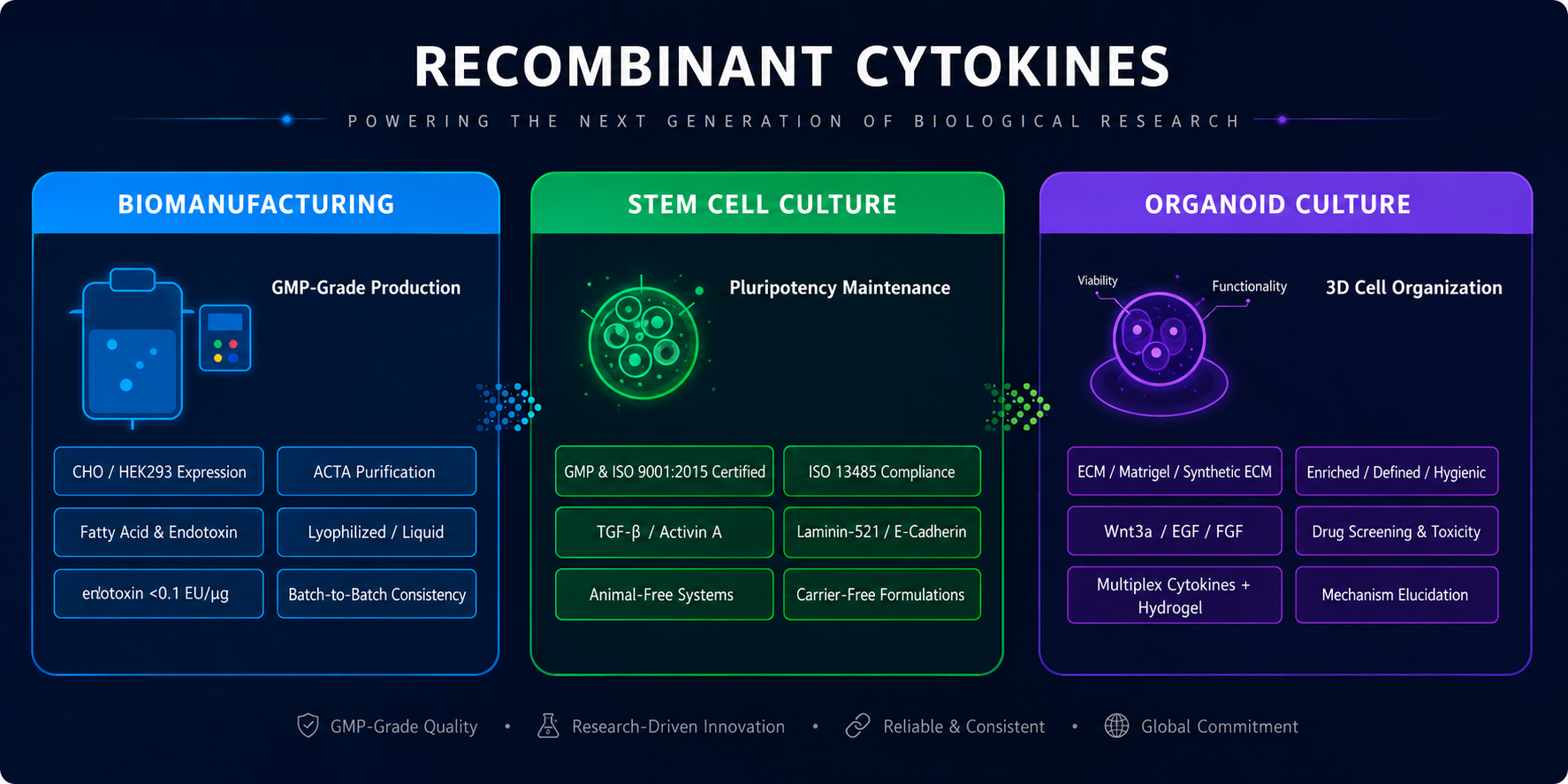
EastMabBio provides a broad portfolio of recombinant cytokines and growth factors designed to support research, cell culture, and biomanufacturing applications. Our recombinant interleukin portfolio includes multiple cytokines such as IL-1 | IL-2 | IL-4 | IL-6 | IL-7 | IL-10 | IL-12 | IL-15 | IL-17 | IL-21. These products can support applications ranging from basic immunology and disease modeling to immune-cell culture and advanced cell therapy research.
Key Product Features
High Purity: Designed to provide reliable performance in cell-based research.
Batch-to-Batch Consistency: Consistent cytokine performance is essential for reproducible experimental results.
Animal-Origin-Free Options: Suitable for researchers developing defined and animal-origin-free cell culture systems.
Carrier-Free / Tag-Free Options: Available formats can support applications where additional carrier proteins or affinity tags are undesirable.
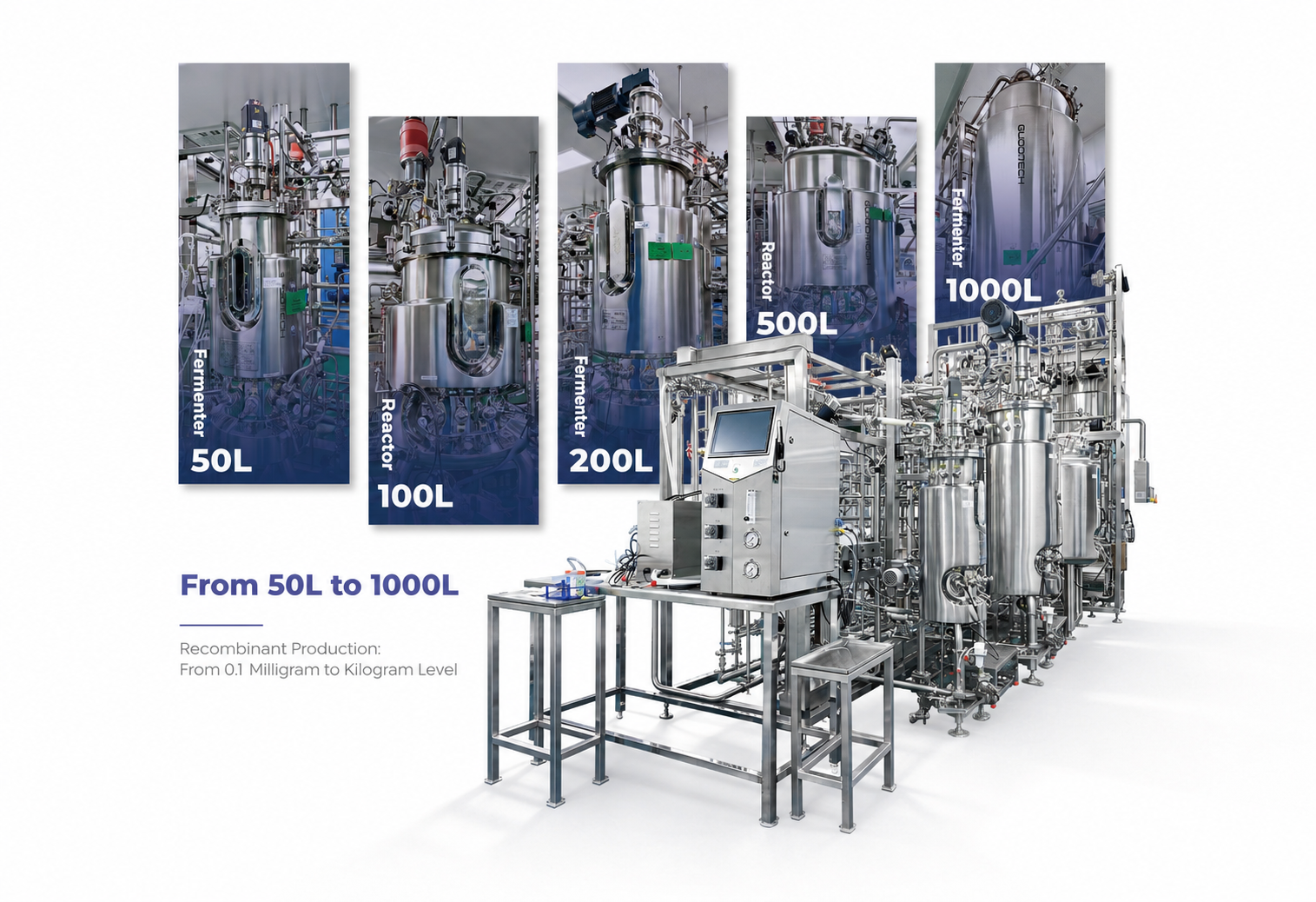
Reliable Supply: Designed to support both routine research and larger-scale cell culture workflows.
Flexible Product Portfolio: Multiple interleukins and complementary cytokines are available to support different cell types and experimental strategies.
Recommend Product:
| Cat# | Product | Species | Purity | Endotoxin (EU/mg) | Expression System |
| Y01921H | IL-1A | Human | ≥95% | ≤100 | E.coli |
| Y04921H | IL-1B | Human | ≥95% | ≤100 | E.coli |
| Y02001 | IL-2 | Human | ≥95% | ≤1 | CHO |
| Y02121H | IL-3 | Human | ≥95% | ≤10 | E.coli |
| Y02201 | IL-4 | Human | ≥95% | ≤10 | CHO |
| Y08701 | IL-5 | Human | ≥95% | ≤10 | CHO |
| Y02301 | IL-6 | Human | ≥95% | ≤10 | CHO |
| Y02321P | IL-6 | Porcine | ≥95% | ≤10 | E. coli |
| Y02321B | IL-6 | Bovine | ≥95% | ≤10 | E. coli |
| Y02401 | IL-7 | Human | ≥95% | ≤10 | CHO |
| Y02501 | IL-10 | Human | ≥95% | ≤10 | CHO |
| Y04001 | IL-12 | Human | ≥95% | ≤10 | CHO |
| Y02701 | IL-15 | Human | ≥95% | ≤10 | CHO |
| Y06601H | IL-17A | Human | ≥95% | ≤10 | CHO |
| Y02821H | IL-18 | Human | ≥95% | ≤10 | E.coli |
| Y02812H | IL-18(His Tag) | Human | ≥95% | ≤10 | Yeast |
| Y02901 | IL-21 | Human | ≥95% | ≤10 | CHO |
| Y12821H | IL-33 | Human | ≥95% | ≤100 | E.coli |
News

Platform Information Submission-Privacy Agreement
· Privacy Policy
No content yet
Platform Information Statement-Laws and Regulations
· Laws and regulations
Trademark registration of Jiangsu Dongkang Biomedical Technology Co., Ltd.
East Mab
East Mab Bio
东抗生物


