Blog
Recombinant Human TNF-alpha: Production, Purity, and Applications
2026.03.20
Hematopoietic stem cell (HSC) expansion is moving from basic cell culture research toward more defined, scalable, and clinically relevant manufacturing strategies. From recombinant cytokine cocktails and small-molecule modulators to biomimetic niches and bioreactor-based systems, researchers are exploring new ways to expand HSCs while preserving their primitive characteristics and long-term function.
For laboratories developing HSC-based cell therapies, hematopoietic stem cell gene therapies, cord blood expansion platforms, and regenerative medicine applications, one question remains central:
How can we expand HSCs ex vivo without compromising their stemness and functional potential?
The answer increasingly lies not in a single factor, but in the combination of optimized cytokine signaling, small-molecule modulation, culture environment, and consistent raw materials.
Hematopoietic stem cells are responsible for maintaining and regenerating the blood and immune system throughout life. They are also central to bone marrow transplantation, cord blood transplantation, and emerging ex vivo gene therapy approaches for hematological disorders.
However, HSCs are naturally rare. This creates a fundamental challenge for transplantation and cell therapy manufacturing: Limited starting material → insufficient HSC dose → limited clinical applicability
Umbilical cord blood is a particularly important example. While cord blood offers advantages including rapid availability and greater tolerance for certain HLA mismatches, the relatively low HSC dose in individual units can limit transplantation, especially in adults. Recent reviews continue to identify ex vivo expansion as a key strategy for overcoming this cell-dose limitation.
This is why the goal of HSC expansion is not simply more cells. It is more functional HSCs while preserving self-renewal and multilineage hematopoietic potential.
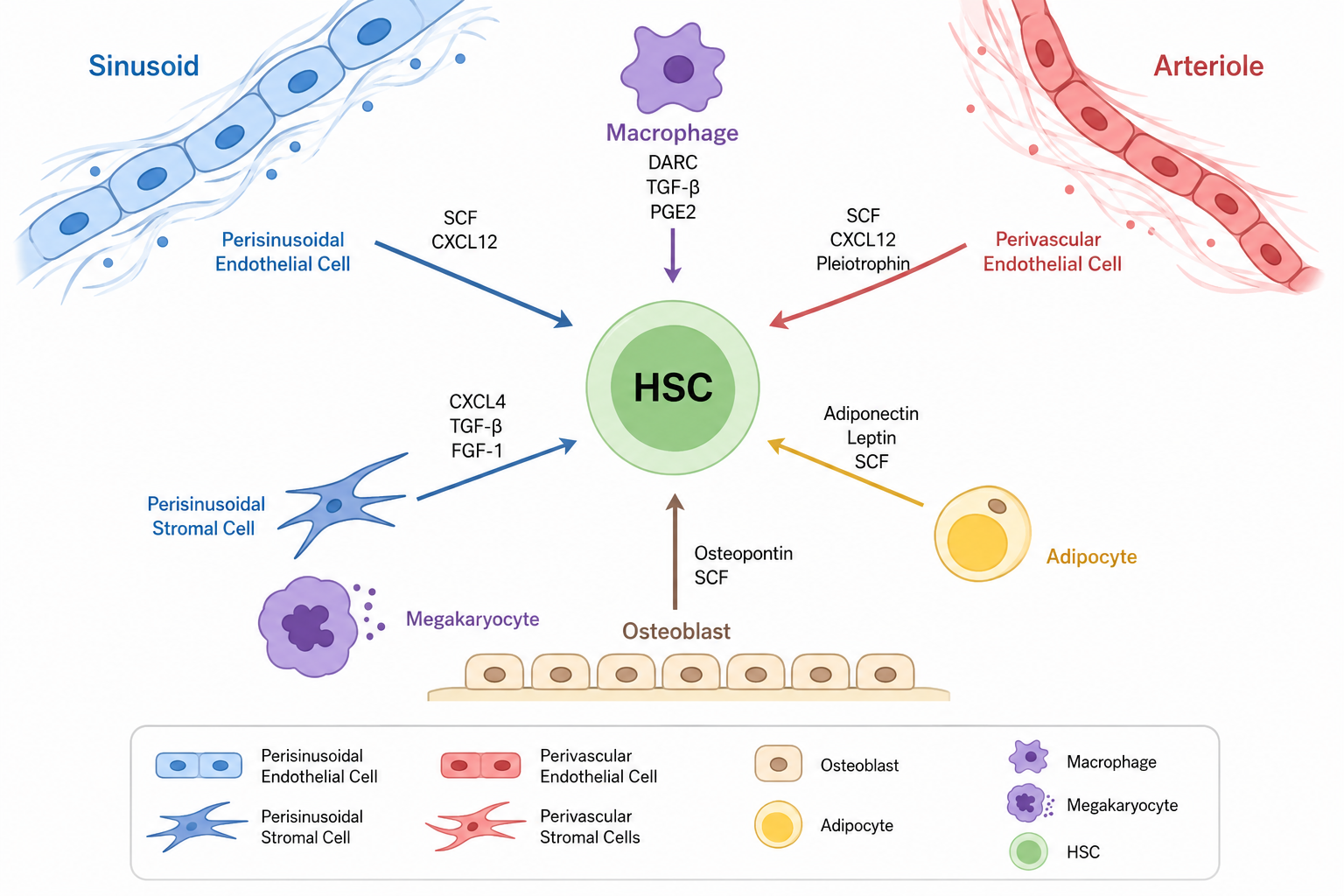
The hematopoietic stem cell niche is controlled by a complex network of cytokines, growth factors, stromal interactions, and signaling pathways. In ex vivo culture, recombinant cytokines are therefore essential components of many HSC expansion systems. Among the most widely investigated factors are:
SCF, also known as KIT ligand, interacts with the c-Kit receptor and supports hematopoietic stem and progenitor cell survival, proliferation, and maintenance. SCF is commonly incorporated into HSC expansion formulations and is frequently combined with other hematopoietic cytokines.
TPO is a key regulator of hematopoietic stem and progenitor cells and plays an important role in maintaining primitive cell populations. In combination with SCF and other factors, TPO is frequently used in ex vivo HSC expansion strategies.
FLT3L supports the proliferation and expansion of early hematopoietic progenitor populations through FLT3 signaling. Its role becomes particularly important when developing multi-factor cytokine cocktails designed to support early hematopoietic populations.
IL-3 and IL-6 can support hematopoietic progenitor proliferation and are used in specific culture systems depending on the target cell population and expansion strategy. Importantly, cytokines do not work independently. A growing body of research suggests that the composition, concentration, timing, and combination of cytokines can significantly influence expansion outcomes.
The requirements for HSC research become significantly more stringent as programs move from discovery to translational development.
A research-grade cytokine may be sufficient for exploratory experiments.
But when HSC expansion becomes part of a cell therapy or gene therapy manufacturing process, developers must consider much more than biological activity.
Reducing undefined animal-derived components can help improve process consistency and facilitate process development.
The quality of SCF, TPO, FLT3L, IL-3, IL-6 and other recombinant proteins can directly affect the reproducibility of the culture system.
Low endotoxin levels are particularly important for sensitive cell-based applications.
Protein purity alone does not guarantee functional performance. Cytokines should be evaluated using relevant biological assays.
When a cytokine is repeatedly used in long-term experiments or process development, consistent biological activity across production lots becomes increasingly important.
For translational and GMP-oriented workflows, raw material documentation, specifications, traceability, and quality-control records become part of the overall manufacturing strategy.

When selecting recombinant proteins for HSC culture and expansion, researchers should look beyond a single specification.
A practical evaluation framework includes:
| Quality Attribute | Why It Matters for HSC Expansion |
|---|---|
| Purity | Reduces unwanted protein impurities |
| Bioactivity | Confirms functional cytokine performance |
| Endotoxin | Helps minimize non-target effects in cell culture |
| Expression System | Important for protein quality and process requirements |
| Tag Information | Relevant for defined and downstream applications |
| Batch Consistency | Supports reproducible HSC culture |
| Sterility / QC | Important for advanced cell culture workflows |
| Documentation | Supports raw-material qualification |
| Traceability | Important for translational and GMP-oriented processes |
The key takeaway is simple: For HSC expansion, recombinant cytokines are not merely media supplements. They are critical process inputs.
EastMabBio provides a growing portfolio of recombinant cytokines and growth factors for stem cell culture, hematopoietic research, and advanced cell therapy applications.
Y03801 Recombinant Human SCF is produced in a CHO expression system and is tag-free, with purity ≥95% and endotoxin ≤10 EU/mg. Its bioactivity is evaluated using a Mo7e cell proliferation assay, with an ED50 of 5–8 ng/mL.
Y07201 Recombinant Human TPO is CHO-expressed and tag-free, with purity ≥95% and endotoxin ≤10 EU/mg. Its bioactivity is measured using a Mo7e proliferation assay, with an ED50 ≤1.0 ng/mL. EastMabBio also provides lot-to-lot consistency data for this product.
Y01201 Recombinant Human FLT-3L is CHO-expressed and tag-free, with purity ≥95%, endotoxin ≤10 EU/mg, and an ED50 ≤1.0 ng/mL in an OCI-AML5 proliferation assay.
Y02121H Recombinant Human IL-3 is available as a tag-free recombinant protein produced in E. coli, with purity ≥95%, endotoxin ≤10 EU/mg, and an ED50 of 0.02–0.1 ng/mL in a TF-1 cell proliferation assay.
Y02301 Recombinant Human IL-6 is produced in CHO cells and is tag-free, with purity ≥95% and endotoxin ≤10 EU/mg. Its bioactivity is validated using M-NFS-60 cells, with an ED50 of 0.2–1 ng/mL.
Together, these products can support researchers developing HSC/HSPC expansion media, CD34+ cell culture systems, cord blood expansion workflows, and cell and gene therapy process development.
Platform Information Submission-Privacy Agreement
· Privacy Policy
No content yet
Platform Information Statement-Laws and Regulations
· Laws and regulations
Trademark registration of Jiangsu Dongkang Biomedical Technology Co., Ltd.
East Mab
East Mab Bio
东抗生物