Blog
Recombinant Bovine Transferrin: Enabling Safe and Efficient Iron Delivery in Modern Cell Culture
2026.04.23
Introduction: The Critical Foundation of Biologic Manufacturing
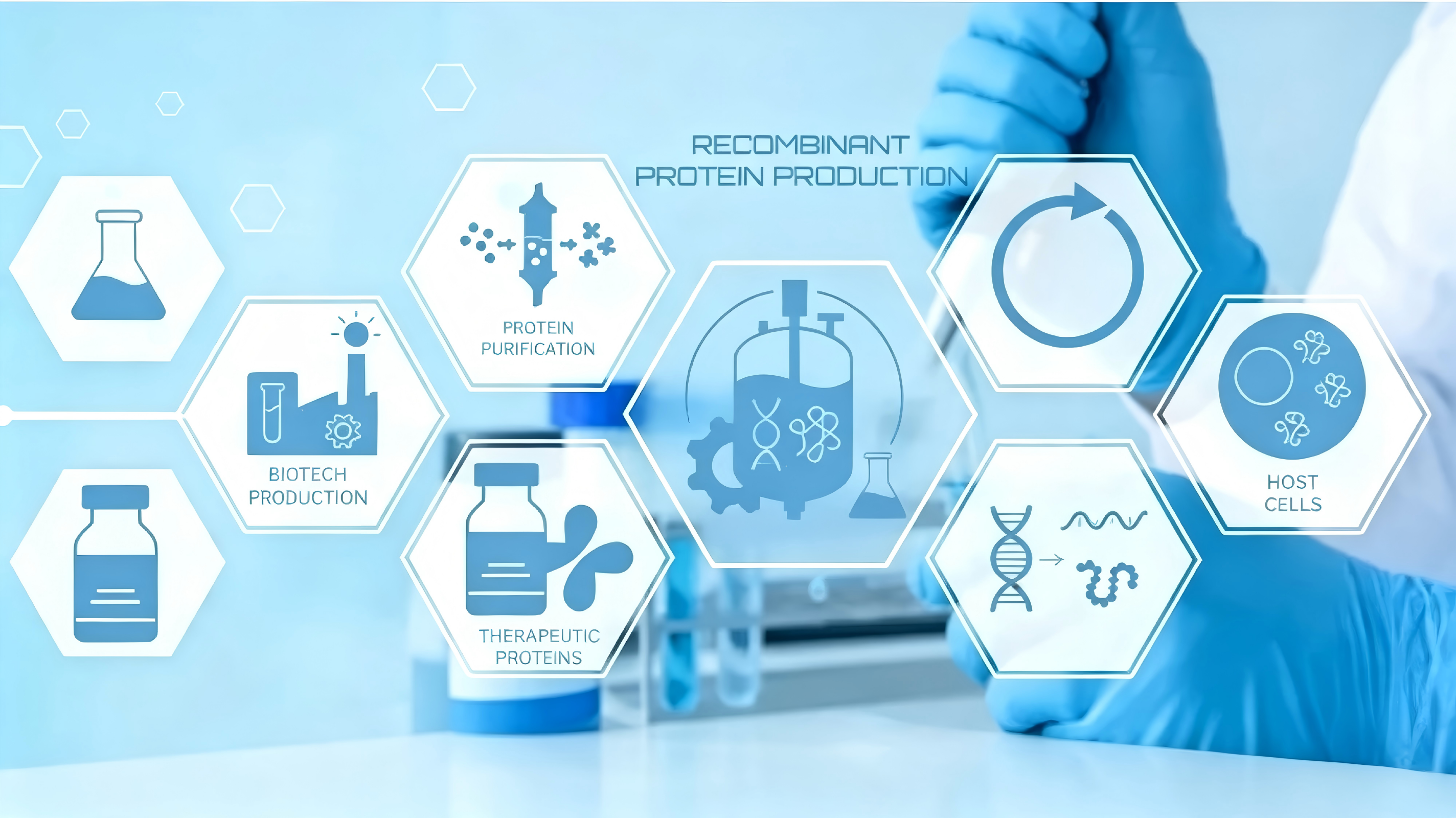
In the biopharmaceutical industry, the journey from a DNA sequence to a commercially viable therapeutic protein is neither simple nor linear. At the heart of this transformation lies cell line development (CLD)—a discipline that determines the productivity, stability, and regulatory acceptability of every recombinant protein manufacturing campaign. For biologics CDMOs and protein therapeutics developers, mastering CLD and subsequent process scale-up is not merely a technical exercise; it is a strategic imperative that defines cost structures, timeline risks, and ultimately, market competitiveness.
Cell Line Development: From Transfection to Master Cell Bank
The modern recombinant protein expression cell line development workflow typically begins with molecular cloning and vector design, where the target gene is codon-optimized and inserted into a suitable expression plasmid. For mammalian protein production, Chinese Hamster Ovary (CHO) cells and Human Embryonic Kidney 293 (HEK293) cells dominate the landscape due to their capacity for human-like glycosylation, proper protein folding, and scalable suspension culture.
Key milestones in CLD include:
Stable transfection and selection: Using Glutamine Synthetase (GS) system or Dihydrofolate Reductase (DHFR) amplification system to achieve high specific productivity (Qp) and volumetric productivity.
Clone screening and single-cell cloning: Leveraging fluorescence-activated cell sorting (FACS), ClonePix systems, or limited dilution cloning to isolate high-producing, genetically stable clones.
Clone characterization: Comprehensive genomic integration analysis (Southern blot, qPCR, next-generation sequencing), transcriptomic profiling, and protein quality assessment to ensure the selected clone meets Quality Target Product Profile (QTPP) criteria.
Cell banking: Establishing a Master Cell Bank (MCB) and Working Cell Bank (WCB) under cGMP conditions with full identity testing, sterility testing, mycoplasma detection, and adventitious agent screening.
A well-executed CLD program can reduce cell culture process development timelines by 3–6 months and significantly de-risk late-phase manufacturing by ensuring clone stability over population doubling levels (PDL) relevant to commercial production.
Upstream Process Development: Optimizing Yield and Quality
Once a robust production cell line is established, upstream bioprocess development focuses on maximizing titer while maintaining product quality attributes. Critical process parameters (CPPs) include:
Media formulation: Chemically defined media (CDM), fed-batch strategies with bolus feeding or continuous perfusion, and balanced nutrient supplementation to sustain high cell viability and productivity.
Bioreactor control: Dissolved oxygen (DO), pH, temperature, osmolality, and agitation speed must be tightly controlled. Single-use bioreactors (SUBs) have become the industry standard for flexible manufacturing and multi-product facilities.
Process analytical technology (PAT): Real-time monitoring via Raman spectroscopy, dielectric spectroscopy, and online metabolite analysis enables adaptive process control and reduces batch-to-batch variability.
For high-titer recombinant protein production, titers exceeding 5–10 g/L are now achievable in fed-batch CHO cultures, though this depends heavily on protein complexity, glycosylation requirements, and aggregation propensity.
Process Scale-Up: From Bench to Commercial Manufacturing
Scaling from shake flask cultures to pilot-scale bioreactors (50–200 L) and ultimately to commercial manufacturing (1,000–20,000 L) introduces mass transfer limitations, mixing heterogeneity, and shear stress challenges. Successful scale-up relies on:
Dimensional analysis and similarity principles: Maintaining constant power per unit volume (P/V), tip speed, and oxygen transfer rate (OTR) across scales.
Computational fluid dynamics (CFD) modeling: Predicting flow patterns, gas hold-up, and cell damage zones in large-scale vessels.
Scale-down models: Validating small-scale bioreactor models (e.g., ambr® 15/250 systems) that mimic commercial-scale behavior for process characterization and failure mode analysis.
Conclusion
Cell line development and process scale-up are the twin pillars of commercial recombinant protein manufacturing. Organizations that invest in platform CLD technologies, advanced process analytics, and scalable manufacturing infrastructure will be best positioned to meet the growing global demand for monoclonal antibodies, fusion proteins, cytokines, and enzyme replacement therapies. Partner with a full-service protein CDMO that integrates CLD, upstream optimization, and GMP manufacturing under one quality management system.
News
Platform Information Submission-Privacy Agreement
· Privacy Policy
No content yet
Platform Information Statement-Laws and Regulations
· Laws and regulations
Trademark registration of Jiangsu Dongkang Biomedical Technology Co., Ltd.
East Mab
East Mab Bio
东抗生物