
Blog
Say Goodbye to Fetal Bovine Serum! How Recombinant Transferrin + Insulin Are Breaking the Cost and Ethical Ceiling for Cultured Meat
2026.06.23
As biopharmaceutical manufacturing and advanced cell culture technologies continue to evolve, researchers are increasingly shifting toward serum-free and chemically defined media systems. One critical component in these formulations is Transferrin, an iron-saturated glycoprotein essential for efficient iron transport and cellular metabolism.
Transferrin is a key iron-binding protein responsible for delivering iron into cells through transferrin receptor-mediated uptake. The HOLO form of transferrin refers to iron-saturated transferrin, which contains bound ferric ions (Fe³⁺) and provides bioavailable iron required for cell proliferation, mitochondrial activity, DNA synthesis, and protein production.
Compared with APO-transferrin, HOLO transferrin offers enhanced iron delivery efficiency in many serum-free cell culture systems.
Iron is a critical trace element in mammalian cell culture. Insufficient iron availability can negatively impact:
Cell proliferation
Viability
Recombinant protein expression
Stem cell maintenance
Organoid growth
Metabolic activity
Recombinant Human Transferrin helps maintain stable iron homeostasis while reducing the variability associated with serum-derived supplements.
Chinese Hamster Ovary (CHO) cells are the dominant mammalian host for therapeutic antibody manufacturing. In serum-free CHO media, recombinant human transferrin is commonly added to maintain intracellular iron homeostasis and support high-density culture.
Typical Application
Cell type: CHO-K1 / CHO-S
Medium: Chemically defined serum-free medium
Transferrin concentration: 5–20 mg/L
Function: Promotes cell proliferation; Improves cell viability; Supports recombinant antibody expression; Enhances mitochondrial metabolism
In fed-batch bioprocesses, transferrin supplementation can help sustain productivity during late-stage culture when nutrient demand increases.
Human induced pluripotent stem cells (iPSCs) and embryonic stem cells (ESCs) require tightly controlled serum-free environments. Transferrin is a core component of many defined stem cell media formulations such as Essential 8 (E8).
Typical Application:
Cell type: Human iPSCs / ESCs
Medium: Essential 8 (E8) or equivalent defined medium
Function: Supports pluripotency maintenance; Reduces oxidative stress; Maintains metabolic activity; Promotes stable colony morphology
Without sufficient iron delivery, stem cells often exhibit reduced proliferation and spontaneous differentiation.
Organoids possess high metabolic activity and rapid proliferation, resulting in increased iron demand. Recombinant transferrin is frequently included in organoid culture media to improve nutrient support in long-term 3D culture.
Intestinal Organoids: Supports stem cell expansion and epithelial proliferation.
Brain Organoids: Enhances neuronal metabolic activity and tissue maturation.
Liver Organoids: Improves hepatocyte-like cell function and viability.
Mesenchymal stem cells (MSCs) are increasingly cultured under xeno-free conditions for cell therapy applications. Transferrin replaces serum-derived iron sources while maintaining proliferation capacity.
Function in MSC Culture: Supports cell expansion; Maintains spindle-shaped morphology; Reduces variability associated with FBS; Improves consistency in clinical manufacturing workflows
Transferrin is commonly combined with insulin and albumin in serum-free MSC media systems.
Activated T cells undergo rapid proliferation and metabolic reprogramming during CAR-T manufacturing. Iron availability directly affects mitochondrial function and cytokine production.
Application in Immune Cell Expansion:
Cell type: T cells / NK cells
Function: Supports rapid proliferation; Enhances metabolic fitness; Maintains viability in serum-free systems
Recombinant transferrin is increasingly used in GMP-compatible immune cell culture media.
Suspension-adapted HEK293 and Vero cells used for viral vaccine production require stable nutrient delivery under serum-free conditions.
Role of Transferrin: Maintains iron availability; Supports high-density suspension growth; Improves consistency in scalable bioreactor culture
This is especially important in industrial vaccine manufacturing where serum-free formulations are preferred for regulatory compliance.
Traditional plasma-derived transferrin may introduce risks such as batch variability, contamination, and limited scalability. Recombinant Human Transferrin provides a safer and more consistent alternative.
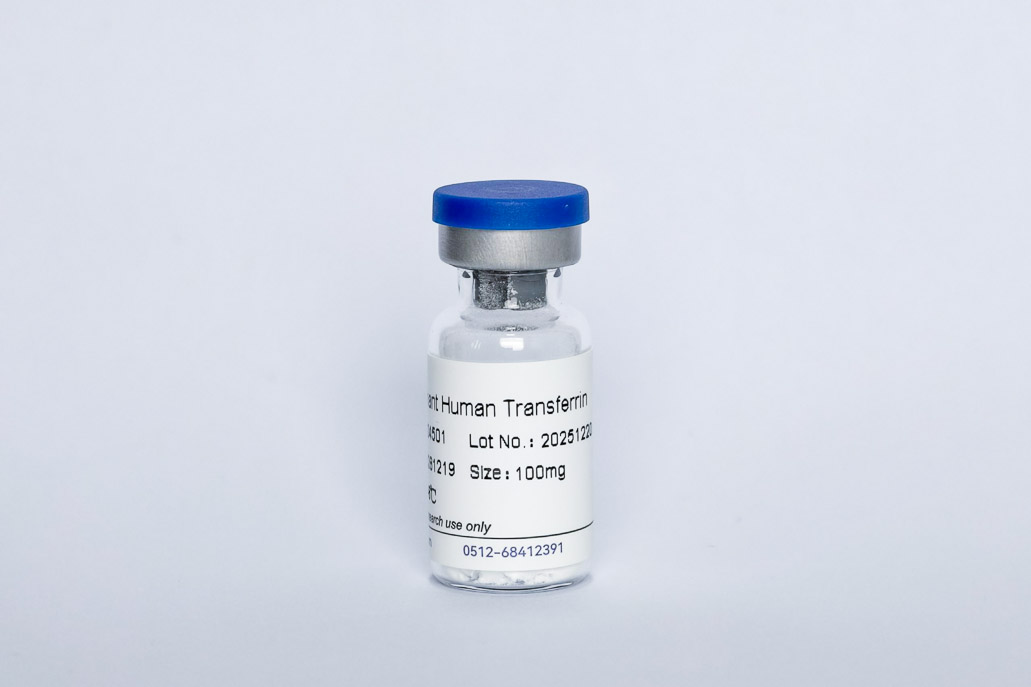
Key advantages include:
Animal-origin-free production
High purity and low endotoxin
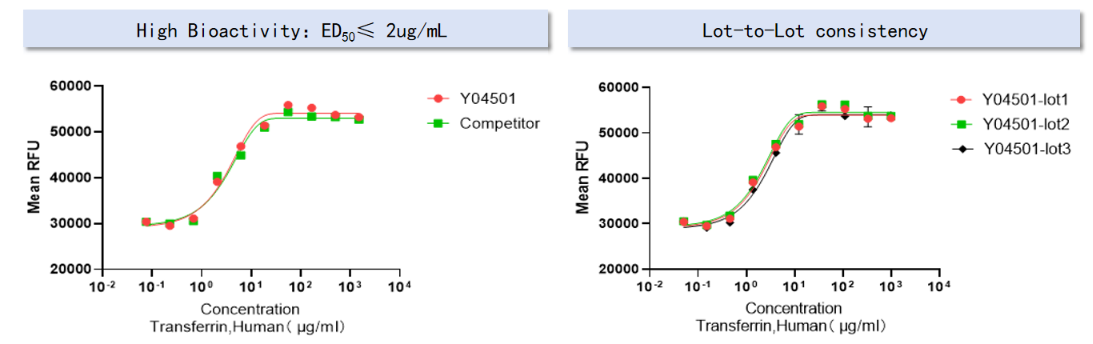
Excellent batch-to-batch consistency
Suitable for serum-free and chemically defined media
Reduced contamination risk
Scalable supply for biomanufacturing
Cat#: Y04501
Expression Host: CHO
Amino Acid Sequence:Val20-Pro698, Accession # P02787
Buffer System: sterile water
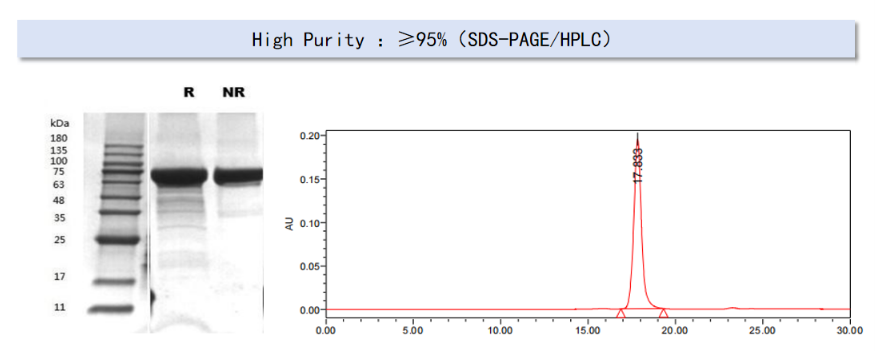
Purity: ≥95% as verified by SDS-PAGE and HPLC
Bioactivity:Measured in a serum-free cell proliferation assay using MDCK canine kidney epithelial cells. The ED₅₀ for this effect is 0.5–2 μg/mL.
Product features: High biological activity; Iron-saturated HOLO form; Optimized for serum-free cell culture; GMP-oriented manufacturing capabilities; Reliable global supply
For leading-edge recombinant protein raw materials, including high-quality Recombinant Human Transferrin, and expert technical support, partner with EastMabBio. Contact us today to discuss your project needs and accelerate your research and development. +86-400-998-0106 | product@eastmab.com
News
Platform Information Submission-Privacy Agreement
· Privacy Policy
No content yet
Platform Information Statement-Laws and Regulations
· Laws and regulations
Trademark registration of Jiangsu Dongkang Biomedical Technology Co., Ltd.
East Mab
East Mab Bio
东抗生物


