
Blog
Recombinant Human TNF-alpha: Production, Purity, and Applications
2026.03.20
Introduction: The Growing Role of Organoids in Biomedical Research
Organoids, organ-on-a-chip platforms, and other advanced in vitro models are gaining attention as researchers seek more physiologically relevant systems for studying human biology, modeling diseases, and evaluating drug responses.
In October 2026, Nature Biomedical Engineering highlighted the growing potential of organoids and microphysiological systems in biomedical discovery, precision medicine, and the development of alternatives that can reduce reliance on animal testing. Meanwhile, improving reproducibility, standardization, and scalability remains essential for broader adoption.
At the heart of reliable organoid culture is a carefully controlled cellular microenvironment. Recombinant proteins, including cytokines and growth factors, help regulate cell proliferation, survival, self-renewal, and differentiation, making them important components of many organoid culture systems.
For researchers developing intestinal, liver, lung, gastric, pancreatic, or tumor organoids, selecting appropriate growth factors is an important step toward achieving consistent and biologically relevant results.
Why Are Growth Factors Essential for Organoid Culture?
Organoids are three-dimensional cell structures that reproduce selected structural and functional characteristics of native tissues. Unlike conventional two-dimensional cell culture, organoid systems depend on coordinated signaling pathways and extracellular environmental cues to maintain tissue-specific properties.
Growth factors and signaling proteins help establish these conditions by regulating key cellular processes.
For example, epidermal growth factor (EGF) supports cell proliferation and survival, while Wnt signaling and R-spondin proteins contribute to stem cell maintenance in many epithelial organoid systems. Noggin, a BMP antagonist, can help maintain a culture environment that supports epithelial stem cell expansion.
The specific combination and concentration of these factors depend on the tissue of origin, cell type, and experimental objective. A culture system optimized for intestinal organoids may not be suitable for liver organoids or tumor-derived models.
Consequently, researchers need to consider not only culture protocols but also the identity, biological activity, purity, and consistency of the proteins used in their media.
Key Recombinant Proteins Used in Organoid Culture
Different growth factors serve complementary functions in organoid culture. Several widely used examples include:
EGF activates EGFR-associated signaling pathways involved in cell proliferation and survival. It is commonly incorporated into epithelial organoid media, including protocols for intestinal and other tissue-derived organoids.
EastMabBio offers recombinant EGF (Y00801) for research applications involving cell culture and organoid development.
Wnt3a activates canonical Wnt/β-catenin signaling, which plays an important role in stem cell maintenance and tissue development. It is frequently used in intestinal organoid culture and other systems requiring Wnt pathway activation.
Because Wnt3a can be challenging to formulate and maintain in an active state, researchers should pay attention to protein handling, storage, and functional validation.
EastMabBio recombinant Wnt3a (Y04603) is designed for research applications requiring Wnt pathway-related signaling support.
Noggin inhibits BMP signaling and helps regulate the balance between stem cell maintenance and differentiation in several organoid culture systems.
Recombinant Noggin (Y03301) can be incorporated into suitable culture formulations according to the specific requirements of the model.
R-Spondin 1 enhances Wnt signaling by modulating the activity of the LGR receptor-associated pathway. It is widely used to support the maintenance and expansion of intestinal epithelial stem cells and related organoid systems.
EastMabBio recombinant R-Spondin 1 (Y03501) supports research workflows requiring controlled growth-factor supplementation.
These proteins are not interchangeable, and no single formulation works universally across all organoid types. Researchers should optimize the combination, dosage, and feeding schedule for their specific experimental model.
Improving Organoid Reproducibility Through Protein Quality
One of the major challenges in organoid research is variability between experiments. Differences in tissue sources, extracellular matrix composition, culture media, and handling procedures can all influence organoid morphology, growth, and differentiation.
Growth-factor quality is another important variable.
Biological activity: A protein's measured purity alone does not establish its functional performance. Appropriate bioactivity testing helps determine whether it produces the expected biological response.
Batch-to-batch consistency: Variations in protein activity or formulation may affect organoid formation, expansion, and downstream assay results. Consistent manufacturing and suitable lot-release testing help reduce this source of variability.
Purity and contaminant control: Depending on the application, impurities and endotoxin may affect cellular responses and experimental interpretation. Researchers should select specifications appropriate to their cell type and assay sensitivity.
Handling and storage: Recombinant proteins can be sensitive to temperature, repeated freeze-thaw cycles, and formulation conditions. Following product-specific instructions helps preserve activity during routine use.
Importantly, reproducibility also requires standardized reporting of growth-factor identities, concentrations, extracellular matrix materials, and culture conditions. Combining suitable reagents with validated protocols makes experimental outcomes easier to interpret and reproduce.
From Disease Modeling to Drug Discovery
Reliable organoid culture supports a growing range of research applications.
Disease modeling: Patient-derived organoids can reproduce selected disease-associated characteristics and help investigate underlying biological mechanisms.
Drug discovery and screening: Organoids provide three-dimensional models for evaluating compound responses and exploring potential therapeutic strategies.
Personalized medicine research: Patient-derived models may help researchers investigate differences in drug response, although their predictive value requires application-specific validation.
Host–pathogen research: Intestinal and other tissue-specific organoids can support investigations of host responses and tissue biology.
Advanced in vitro models: Integration with organ-on-a-chip and microphysiological platforms may enable more complex studies of tissue interactions and physiological responses.
Across these applications, recombinant proteins help researchers establish defined signaling environments. Their performance becomes especially important when experiments involve multiple cell lines, extended culture periods, or comparisons across batches and laboratories.
EastMabBio: Recombinant Protein Solutions for Organoid Research
EastMabBio provides recombinant proteins for cell culture, stem cell research, organoid development, and other life science applications.
Our organoid-related product portfolio includes EGF, Wnt3a, Noggin, R-Spondin 1, and additional growth factors used in research workflows. Product selection can be tailored to the biological requirements of different models and experimental objectives.
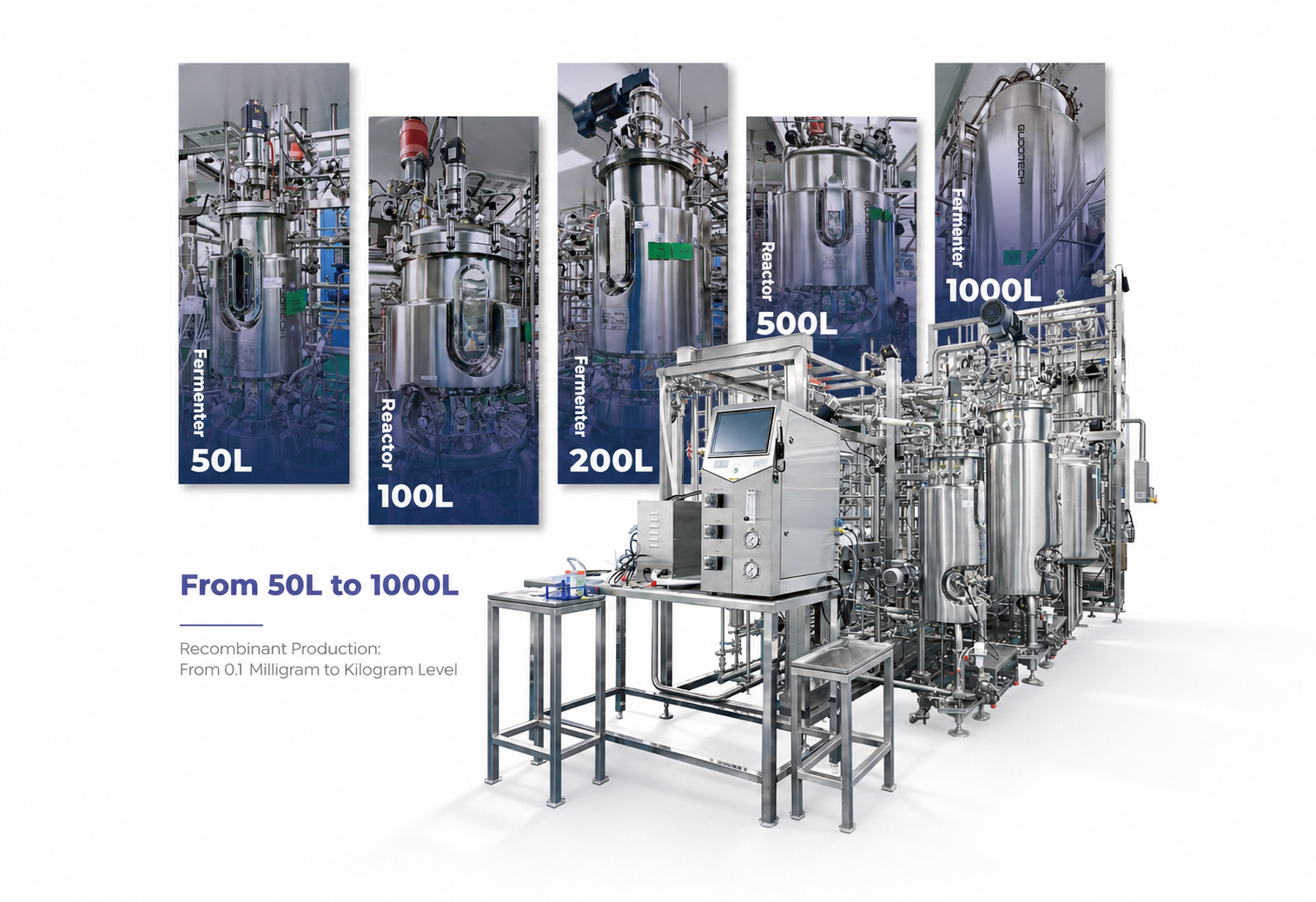
Our focus on recombinant protein manufacturing includes protein purity, biological activity verification, batch consistency, and scalable production capabilities. For research teams with specific requirements, custom protein services can support tailored development needs, subject to feasibility assessment.
Whether you are establishing a new organoid culture protocol, optimizing an existing model, or scaling up your experiments, selecting appropriate growth factors and reliable protein supply is an important part of building a reproducible workflow.
Conclusion
As organoids and other advanced in vitro models continue to evolve, the quality and consistency of culture components will remain important to reliable biomedical research.
Choosing suitable recombinant proteins, validating biological activity, and standardizing culture conditions can help researchers reduce experimental variability and generate more interpretable results.
Explore EastMabBio’s recombinant proteins for organoid culture and cell-based research.
Contact us at product@eastmabbio.com to discuss your protein requirements or custom solutions.
News
Platform Information Submission-Privacy Agreement
· Privacy Policy
No content yet
Platform Information Statement-Laws and Regulations
· Laws and regulations
Trademark registration of Jiangsu Dongkang Biomedical Technology Co., Ltd.
East Mab
East Mab Bio
东抗生物


